
Gluphisia
Boisduval, 1828
Species Guides
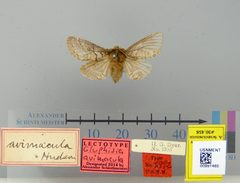
5- Gluphisia avimacula(Four-spotted Gluphisia Moth)
- Gluphisia lintneri(Lintner's Gluphisia Moth)
- Gluphisia septentrionis(Common Gluphisia Moth)
- Gluphisia severa(Banded Pebble Moth)
- Gluphisia wrightii
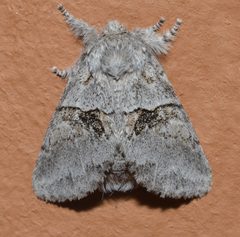
Gluphisia is a of in the Notodontidae, first described by Boisduval in 1828. in this genus are commonly referred to as 'prominent moths' and are attracted to artificial light sources, including blacklights used in moth surveys. The genus includes six recognized species distributed across North America and Eurasia.
Pronunciation
How to pronounce Gluphisia: /ɡluˈfɪsiə/
These audio files are automatically generated. While they are not always 100% accurate, they are a good starting point.
Identification
Gluphisia can be distinguished from other notodontid by their characteristic resting posture and wing patterns. As 'prominent moths,' they typically hold their wings tent-like over the body. Specific identification to species level requires examination of wing pattern details, particularly the presence and arrangement of dark markings on the forewings. Gluphisia crenata and related species show distinctive scalloped or wavy wing margins.
Images
Distribution
North America (including Vermont, Colorado, and other regions of the United States), Scandinavia (Denmark, Norway, Sweden), and Central Asia (Oxiana region).
Behavior
are and strongly attracted to ultraviolet light sources, including blacklights and mercury vapor lamps. They are frequently documented during -lighting events and citizen science surveys such as National Moth Week.
Human Relevance
Documented in citizen science initiatives and -watching events. The serves as an example of moth diversity accessible through simple light-trapping methods in urban and natural settings.
Similar Taxa
- Other Notodontidae generaShare the 'prominent moths' and similar resting posture, but differ in wing pattern and specific morphological details.
- TortricidaeLeafroller moths may be confused at first glance but differ in wing shape and resting posture; Tortricidae typically fold wings flat or bell-like rather than tent-like.
- CrambidaeGrass veneer and other crambids may occur at the same light sources but have more slender bodies and different wing venation.
More Details
Species composition
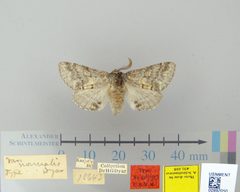
The contains six : G. avimacula (Hudson, 1891), G. crenata (Esper, 1785) [including G. septentrionis as synonym], G. lintneri (Grote, 1877), G. oxiana (Djakonov, 1927), G. severa (H. Edwards, 1886), and G. wrightii (H. Edwards, 1886).