
Syngrapha interrogationis
(Linnaeus, 1758)
Scarce Silver Y Moth
Syngrapha interrogationis, commonly known as the scarce silver Y, is a noctuid distributed across northern regions of the Northern Hemisphere. The ranges from Alaska and Canada through Iceland, Europe, and Siberia to Northeast Asia including Japan. display the characteristic silver Y-shaped mark on the forewings typical of the Plusiinae . The species is considered scarce or locally distributed in parts of its European range.

Pronunciation
How to pronounce Syngrapha interrogationis: /sɪnˈɡræfə ˌɪn.tə.rə.ɡeɪˈʃoʊ.nɪs/
These audio files are automatically generated. While they are not always 100% accurate, they are a good starting point.
Identification
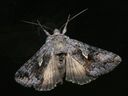
Distinguished from other Syngrapha and similar Plusiinae by the specific shape and orientation of the silver Y marking on the forewings. The marking resembles a question mark, which helps separate it from the more common Autographa gamma (silver Y ), where the Y is more uniformly shaped. Examination of genitalia may be required for definitive identification of similar species. The species is generally scarcer than other silver Y moths in Europe.
Images
Appearance
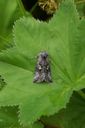
Medium-sized noctuid with forewings displaying a distinctive silvery Y-shaped or question mark-shaped stigma, from which the name 'interrogationis' derives. Forewings are generally brownish or greyish with variable darker markings. Hindwings are pale with darker margins. Wingspan approximately 35–40 mm. The silver Y marking is a key diagnostic feature of the Plusiinae .
Habitat
Found in a variety of northern including forests, subarctic tundra margins, moorlands, and open woodland. In Europe, occurs in upland and northern areas including Scotland, Scandinavia, and alpine regions. Habitats typically feature the larval plants and provide suitable conditions for the cool-adapted .
Distribution
Circumboreal distribution across the northern Northern Hemisphere. North America: Alaska and Canada. Europe: Iceland, northern and western Britain (including Scotland), Scandinavia, and mountainous areas south to the Alps and Pyrenees. Asia: Siberia, Russian Far East, and Northeast Asia including Japan.
Seasonality
are active during the summer months, typically June to August in most of the range. Single-brooded () in northern parts of the range; may have partial second in more southern areas. Overwinters as pupa.
Diet
Larvae feed on a variety of herbaceous plants including Vaccinium (bilberries, blueberries, cranberries), and other low-growing plants in the Ericaceae . Larvae are on low-growing herbs and shrubs in northern .
Host Associations
- Vaccinium - larval foodplantPrimary including bilberry, blueberry, cranberry
- Ericaceae - larval foodplant Various low-growing ericaceous shrubs
Life Cycle
Complete (holometabolous). stage followed by larval development on plants. Larvae overwinter or pupate, with pupal through winter. emerge in summer. Single per year () in most of range, with possible partial second generation in favorable southern localities.
Behavior
are and attracted to light. They visit flowers for nectar. Larvae feed on leaves of plants, typically low-growing in the herb layer. The exhibits typical noctuid resting posture with wings folded roof-like over the body.
Ecological Role
Larval herbivore in northern and montane , contributing to nutrient cycling through consumption of ericaceous and other low-growing vegetation. serve as when visiting flowers. Serves as prey for various including birds, bats, and predatory insects.
Human Relevance
Occasional minor pest of Vaccinium crops (blueberries, cranberries) in some regions, though generally not economically significant due to scattered distribution. Subject of conservation concern in parts of Europe where it is considered scarce or threatened by loss. Monitored by lepidopterists and recording schemes.
Similar Taxa
- Autographa gammaSimilar silver Y marking on forewings, but Y is more uniformly shaped rather than question mark-like; much more common and widespread in Europe; occurs in wider range of including agricultural areas
- Syngrapha hochenwarthiSimilar with overlapping range in Europe; requires examination of wing pattern details or genitalia for separation
- Plusia festucaeAnother Plusiinae with similar size and general appearance; differs in forewing pattern and shape of silver marking
More Details
Taxonomic history
Originally described as Phalaena interrogationis by Linnaeus in 1758, the was later transferred to the Syngrapha. The specific epithet refers to the question mark-like shape of the silver marking on the forewings.
Conservation status
Considered scarce and locally distributed in much of its European range, with declines noted in some areas due to loss and changes in land management. Protected or listed as a of conservation concern in several European countries.