
Trichoplusia
McDunnough, 1944
Looper moths
Species Guides
1- Trichoplusia ni(Cabbage Looper Moth)
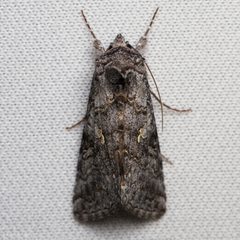
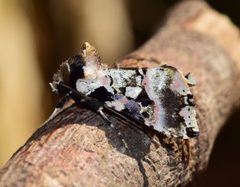
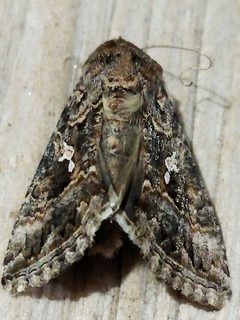
Trichoplusia is a of noctuid in the Plusiinae, containing approximately 20 described . The most economically significant species is , the , a major agricultural pest. Larvae of this genus are characterized by their distinctive looping locomotion, resulting from reduced numbers. The genus has a distribution with species found across multiple continents.
Pronunciation
How to pronounce Trichoplusia: //ˌtrɪkoʊˈpluːsiə//
These audio files are automatically generated. While they are not always 100% accurate, they are a good starting point.
Identification
Trichoplusia can be distinguished from related Plusiinae by forewing pattern details, particularly the configuration of silvery markings. The genus is most reliably separated from the similar Chrysodeixis by larval mandibular : has ridges extending fully from base to edge on the inner mandibular surface, whereas Chrysodeixis includens ridges do not reach the edge. Larval count (two abdominal pairs) separates loopers from geometrid caterpillars (one pair) and other noctuids (three or four pairs).
Images
Habitat
Agricultural fields, gardens, and disturbed with plants. (T. ni) is strongly associated with cultivated brassicaceous crops. Other occupy varied habitats from tropical to temperate regions, often in association with herbaceous vegetation.
Distribution
distribution. occurs worldwide in temperate and tropical regions. Other show more restricted ranges: T. orichalcea in the Old World tropics and subtropics; multiple African species described by Dufay (T. callista, T. cinnabarina, T. elacheia, T. epicharis, T. glyceia, T. lampra, T. photeina, T. sogai, T. telaugea); T. roseofasciata described from East Africa; T. sestertia from South America.
Seasonality
Multiple per year in favorable climates. peak in late summer through fall in temperate regions. Activity patterns vary by and latitude, with year-round breeding possible in tropical areas.
Diet
Larvae are folivorous, feeding on leaves of diverse herbaceous plants. is highly , recorded on cabbage, lettuce, tomatoes, cotton, soybeans, and numerous other crops. The as a whole shows broad plant associations, though individual may vary in host range.
Host Associations
- Brassica oleracea - larval food plantCabbage and related crops
- Glycine max - larval food plantSoybean, secondary
- Lactuca sativa - larval food plantLettuce
- Gossypium - larval food plantCotton
- Solanum lycopersicum - larval food plantTomato
Life Cycle
Complete with four stages: , larva, pupa, . Eggs are deposited singly on leaf undersides. Larvae progress through six instars, with later instars causing disproportionately more feeding damage. occurs in a silken cocoon on or in soil. Multiple per year; no reported for tropical , temperate populations may overwinter as pupae.
Behavior
Larvae exhibit characteristic looping locomotion due to reduced number, arching the body to bring prolegs forward to meet thoracic legs. are and attracted to light. Larvae feed primarily on leaf tissue, often remaining on undersides of leaves. When disturbed, larvae may drop from plants on silken threads.
Ecological Role
Herbivore in agricultural and natural . Larvae function as primary consumers, converting plant to animal tissue. Serve as prey for diverse natural enemies including , predatory , and spiders. The green lynx spider (Peucetia viridans) is a documented of T. ni. can significantly alter plant structure in affected areas.
Human Relevance
Major agricultural pest , particularly T. ni (). Economic damage occurs through defoliation of vegetable crops, with yield losses documented in cabbage, lettuce, broccoli, and other brassicaceous crops. Also a pest of cotton and soybeans. Management relies on , though resistance has developed in some . using Bacillus thuringiensis and viruses is practiced. T. ni lines are widely used in scientific research and biotechnology.
Similar Taxa
- Chrysodeixis includensFormerly placed in Pseudoplusia; larvae nearly identical in appearance and . Distinguished by mandibular ridge (ridges do not reach edge in C. includens) and pupal characteristics (green, leaf-attached pupae versus brown, soil-surface pupae in Trichoplusia).
- Autographa californicaAlfalfa looper with similar larval and looping . Distinguished by forewing patterns and larval capsule coloration; typically earlier seasonal occurrence (May-June versus late summer for T. ni).
- GeometridaeGeometrid caterpillars also loop, but possess only one pair of abdominal versus two pairs in Trichoplusia; generally more slender body form and different structure.
More Details
Research importance
is one of the most important insect in culture research. The Tn5 cell line from T. ni is widely used for recombinant protein production, particularly with expression systems. This has driven extensive study of the species' beyond its pest status.
Taxonomic history
The has undergone taxonomic revision, with some formerly placed here now transferred to other genera (e.g., Pseudoplusia includens to Chrysodeixis). The African fauna was extensively revised by Dufay in the 1960s-1970s, resulting in description of numerous new species.
Sources and further reading
- BugGuide
- Wikipedia
- GBIF taxonomy match
- iNaturalist taxon
- NCBI Taxonomy
- Catalogue of Life
- Soybean Insects: Mid-to-Late Season Pests (V8 to Maturity) - AgriLife Extension Entomology
- Katja Poveda: Zeroing in on Plant-Insect Interactions | Bug Squad
- Gotta Love That Spider! | Bug Squad
- In the Loop--on the Mustard | Bug Squad
- Trichoplusia ni Archives - Entomology Today
- ID Challenge #14 | Beetles In The Bush