
Chrysodeixis
Hübner, 1821
Species Guides
1- Chrysodeixis includens(Soybean Looper Moth)
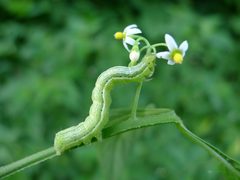
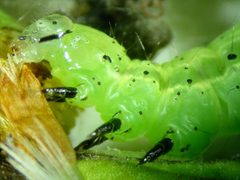
Chrysodeixis is a of owlet moths ( Noctuidae, Plusiinae) described by Jacob Hübner in 1821. The genus contains approximately 30 described distributed across the Americas, Asia, and Oceania. Several species are significant agricultural pests, particularly Chrysodeixis includens (soybean looper) and C. chalcites (tomato looper), which cause defoliation damage to legume and solanaceous crops. Larvae are characterized by having three pairs of and a distinctive looping locomotion.
Pronunciation
How to pronounce Chrysodeixis: /ˌkɹɪsoʊˈdeɪksɪs/
These audio files are automatically generated. While they are not always 100% accurate, they are a good starting point.
Identification
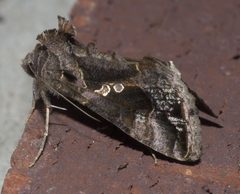
distinguished from similar Plusiinae by specific wing pattern elements, particularly the configuration of metallic markings on forewings. Larvae distinguished from true loopers (Geometridae, which have only two pairs of ) by presence of three proleg pairs. Within Plusiinae, larvae distinguished from related such as Trichoplusia and Rachiplusia by subtle morphological features including shape and thoracic pigmentation patterns. Chrysodeixis includens specifically identified from C. chalcites by geographic distribution and associations in North America.
Images
Habitat
Agricultural and natural supporting plants. Larvae found on foliage of legumes (soybean, bean), solanaceous crops (tomato, potato), and various other herbaceous plants. , attracted to light.
Distribution
Widespread across North America, Central and South America, Europe, Asia, Africa, and Oceania. Individual have more restricted ranges: C. includens primarily in the Americas (expanding from North America into South America), C. chalcites in Europe and Asia, C. eriosoma in Australia and New Zealand, C. argentifera in Australia.
Seasonality
Multiple per year in temperate and tropical regions. Activity peaks during late growing season (July–September in northern hemisphere) when plants are at reproductive stages. stage varies by and latitude.
Diet
Larvae are folivores, feeding on leaves of diverse plants. Major crop hosts include soybean, tomato, tobacco, bean, and various other legumes and solanaceous plants. Feeding typically begins on lower leaf surface between (window-paning), progressing to full-thickness defoliation and skeletonization as larvae mature.
Life Cycle
Holometabolous development with , larva (five instars), pupa, and stages. Eggs hatch in 3–5 days. Larval development spans 2–3 weeks under favorable conditions. occurs in soil or leaf litter. Adult after 1–2 weeks. Multiple annually with generation time approximately 4–6 weeks.
Behavior
Larvae exhibit characteristic looping locomotion due to reduced number. When disturbed, larvae may drop from foliage on silk threads. are and strongly attracted to artificial light. Females oviposit preferentially on leaf undersides in upper or middle plant .
Ecological Role
Larvae function as primary consumers in agricultural and natural . Several are major crop pests causing significant yield losses through defoliation. Serve as for diverse including Microplitis demolitor and Copidosoma floridanum. Prey for including predatory stink bugs (Podisus maculiventris).
Human Relevance
Several are economically important agricultural pests. Chrysodeixis includens (soybean looper) is a major defoliator of soybean in the southern United States and increasingly in South America, with documented resistance to multiple chemical classes. C. chalcites (tomato looper) and C. eriosoma (green garden looper) damage vegetable crops. Management relies on integrated approaches including , Bt-based products, and selective insecticides.
Similar Taxa
- RachiplusiaAlso in Plusiinae with three pairs of and looping larvae; distinguished by wing patterns and larval coloration (R. nu larvae often have darker, smoky-blue cast compared to bright yellow-green of C. includens)
- TrichoplusiaPlusiinae including cabbage looper (T. ni); larvae similar in form but distinguished by specific markings and geographic distribution
- Geometridae (true loopers)Larvae also loop but have only two pairs of (on abdominal segments 4–5) versus three pairs in Chrysodeixis; different with different
Misconceptions
Larvae are often colloquially called 'inchworms' or 'measuring worms,' terms properly restricted to geometrid caterpillars with only two pairs. The former name Pseudoplusia persists in older literature for C. includens, though this synonymy was formalized by Goater et al. (2003) and applied to North American fauna by Lafontaine and Schmidt (2010).
More Details
Taxonomic History
The Pseudoplusia was synonymized under Chrysodeixis by Goater et al. (2003), with this synonymy formally applied to North American by Lafontaine and Schmidt (2010). C. includens was long known as Pseudoplusia includens in North American literature.
Insecticide Resistance
Chrysodeixis includens has developed documented resistance to multiple classes including , , and carbamates, driving interest in alternatives such as .
Sources and further reading
- BugGuide
- Wikipedia
- GBIF taxonomy match
- iNaturalist taxon
- NCBI Taxonomy
- Catalogue of Life
- Scientists Reveal New Method to Characterize Physiological Responses to Parasitism | Bug Squad
- ID Challenge #14 | Beetles In The Bush
- A Revision of Soybean Caterpillar Pest Information for U.S. Soybean
- Noctuidae | Beetles In The Bush | Page 2
- “Sunflower looper” – Rachiplusia nu | Beetles In The Bush
- owlet moths | Beetles In The Bush
- The Effects of Adjuvants on Steinernema Carpocapsae Efficacy Against Chrysodeixis Includens and Suspension Stability.