
Panthea
Hübner, 1820
Species Guides
6- Panthea acronyctoides(Black Zigzag)
- Panthea furcilla(Eastern Panthea Moth)
- Panthea gigantea(Giant Panthea Moth)
- Panthea greyi
- Panthea judyae
- Panthea virginarius(Cascades panthea)
Panthea is a of owlet moths in the Noctuidae, Pantheinae. The genus name derives from Greek and Persian, meaning 'of all gods.' within Panthea are primarily distributed in North America, with some Neotropical representatives including recently described species from Honduras and the Dominican Republic. The genus includes notable species such as Panthea furcilla (eastern panthea or tufted white pine caterpillar) and Panthea acronyctoides (black zigzag or tufted spruce caterpillar), whose larvae feed on conifer .
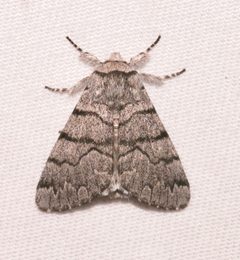
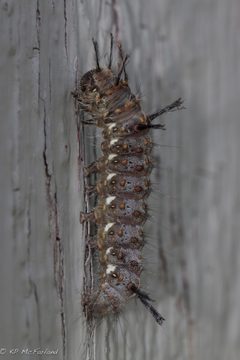
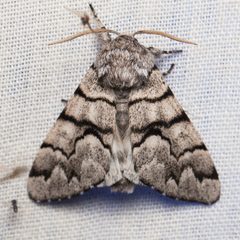
Pronunciation
How to pronounce Panthea: /ˈpænθiə/
These audio files are automatically generated. While they are not always 100% accurate, they are a good starting point.
Identification
Panthea are distinguished from related noctuid by a combination of forewing pattern elements and genitalia structure. Species-level identification relies on wing pattern details, size, and examination of male and female genitalia. For example, P. hondurensis is distinguished from P. guatemala by forewing pattern and genitalia structure, while P. taina differs from P. reducta in wing pattern, size, and genitalia features. Larvae are characterized by tufted setae and association with conifer .
Images
Habitat
Panthea are associated with forested , particularly coniferous forests. Larval include spruce (Picea), white pine (Pinus strobus), and other conifers. Specific habitat preferences vary by species, with some occurring in and montane forest zones.
Distribution
The is primarily Nearctic in distribution, with recorded across North America from Canada to the southern United States. Neotropical extensions include Guatemala, Honduras (P. hondurensis), and the Dominican Republic (P. taina). Distribution records exist for Norway, Sweden, and Vermont, USA, though these may represent vagrant or introduced occurrences.
Diet
Larvae feed on conifer needles. Specific associations include white pine for P. furcilla and spruce for P. acronyctoides.
Host Associations
- Picea - larval tufted spruce caterpillar
- Pinus strobus - larval eastern white pine; of P. furcilla
- Populus deltoidescontext mentions cottonwoods in areas but not confirmed as Panthea
Behavior
are attracted to ultraviolet light sources at night. Larvae possess tufted setae, giving rise to such as 'tufted spruce caterpillar' and 'tufted white pine caterpillar.'
Ecological Role
Larvae function as folivores on conifer , potentially contributing to defoliation events in forest . The ecological impact of most appears limited, though some may reach densities.
Human Relevance
Some are known as forest defoliators of minor economic significance. The tufted spruce caterpillar (P. acronyctoides) and eastern panthea (P. furcilla) are recognized forestry pests in North America.
Similar Taxa
- LafontaineanaNewly established Andean distinguished from Panthea by and ; previously confused with Panthea in Neotropical fauna
- AcronictaRelated noctuid with similar larval tufting; distinguished by wing pattern and genitalia structure
More Details
Etymology
The name Panthea derives from Greek and Persian elements meaning 'of all gods.'
Taxonomic history
The was established by Hübner in 1820. Recent taxonomic work has expanded the genus to include Neotropical and clarified distinctions from related genera through molecular using COI barcode sequences.
Species diversity
The includes approximately 12-15 described , with ongoing revisionary work describing new Neotropical .