
Pantheinae
Smith, 1898
Genus Guides
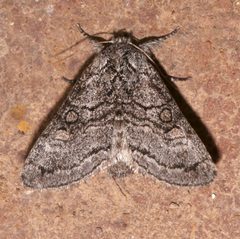
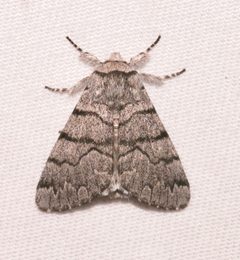
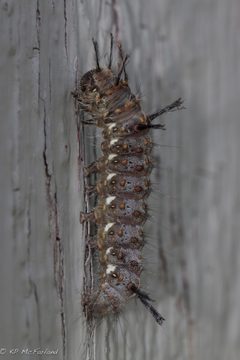
8Pantheinae is a small of within Noctuidae, historically treated as a distinct (Pantheidae). The subfamily contains approximately 20 distributed primarily in the Holarctic and Neotropical regions, with notable diversity in the Andean Mountains. Several Neotropical genera form a distinctive 'Jaguar Moth' clade characterized by bold patterning and potential mimicry of tiger moths.
Pronunciation
How to pronounce Pantheinae: /pænˈθeɪnaɪ/
These audio files are automatically generated. While they are not always 100% accurate, they are a good starting point.
Images
Habitat
Andean occur in montane cloud forest at elevations of 1950–3050 m.
Distribution
Holarctic and Neotropical; Andean Mountains from Venezuela to Bolivia (Colombia, Ecuador, Bolivia documented).
Behavior
of Andean are sexually dimorphic in size, with females larger than males. Males of some genera possess hyaline or semi-hyaline wings while females have more fully scaled wings. Antennal form varies: in both sexes in some genera, serrate in males and filiform in females in others. Members of the 'Jaguar Moth' clade (including Gaujonia, Lafontaineana, Bathyra, Lichnoptera) have been observed to be frequently confused with cicadas by observers in South America.
Ecological Role
Millerana tigrina has been documented as a pest of pines in Ecuador.
Human Relevance
Andean are rarely collected, suggesting limited direct human interaction. One species has been recorded as an agricultural pest.
Similar Taxa
- ArctiinaeJaguar in Pantheinae are thought to mimic tiger moths in this of Erebidae.
- CicadidaeAndean Pantheinae are frequently mistaken for cicadas by observers due to appearance and .
Sources and further reading
- BugGuide
- Wikipedia
- iNaturalist taxon
- NCBI Taxonomy
- Catalogue of Life
- A new Andean genus, Lafontaineana, with descriptions of four new species and two new Neotropical species of Panthea (Noctuidae, Pantheinae).
- Revision of the South American genus Gaujonia Dognin (Noctuidae, Pantheinae) with descriptions of five new genera and twenty-one new species.