
Panthea virginarius
Grote, 1880
Cascades panthea, Western Panthea Moth
Panthea virginarius is a noctuid of western North America, ranging from southern California to the Alaskan Panhandle. The exhibits substantial variation in size and coloration, with forms previously considered separate species until taxonomic revision in 2009. Larvae feed on conifers, particularly Douglas-fir. A disjunct occurs in the Cypress Hills of Alberta and Saskatchewan, separated from the main range.
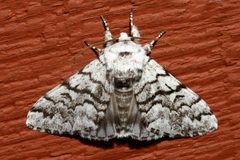
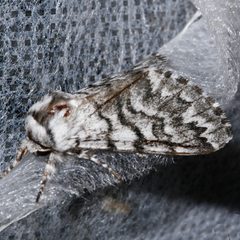
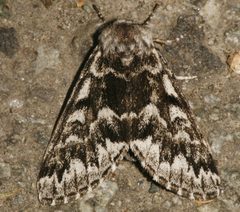
Pronunciation
How to pronounce Panthea virginarius: //ˈpænθiə vɜrˌdʒɪˈnɛəriəs//
These audio files are automatically generated. While they are not always 100% accurate, they are a good starting point.
Identification
Distinguished from similar Panthea by geographic range and, where sympatric, by genitalia examination. The angelica and portlandia forms, previously considered separate species, are now treated as color variants.
Images
Appearance
Highly variable in both size and coloration. The angelica and portlandia forms represent distinct color variants that were formerly treated as separate .
Habitat
Coniferous forests; associated with Pseudotsuga menziesii and other conifer .
Distribution
Western North America west and north of the Great Basin: southern California coast northward to Charlotte Islands (British Columbia) and Alaskan Panhandle; eastward to central California, northern Nevada, Idaho, north-western Wyoming, western Montana, and south-western Alberta. Disjunct in Cypress Hills of Alberta and Saskatchewan.
Diet
Larvae feed on Pseudotsuga menziesii (Douglas-fir) and other conifers.
Host Associations
- Pseudotsuga menziesii - larval food plantprimary
- conifers - larval food plantother conifer
Ecological Role
Herbivore; larval defoliator of conifers.
Similar Taxa
- Panthea angelicaFormerly treated as separate , now synonymized under P. virginarius as a color form
- Panthea portlandiaFormerly treated as separate , now synonymized under P. virginarius as a color form
Misconceptions
The angelica and portlandia forms were considered distinct until 2009; this taxonomic change may not be reflected in older literature.
More Details
Taxonomic history
The underwent significant taxonomic revision in 2009, when forms previously described as separate species (angelica and portlandia) were synonymized under P. virginarius.
Disjunct population
The Cypress Hills in Alberta and Saskatchewan is geographically isolated from the main western range, representing a notable disjunction in distribution.