
Orthosia flaviannula
(Smith, 1899)
Orthosia flaviannula is a noctuid described by Smith in 1899. It belongs to the Orthosia, a group of early spring-flying moths commonly known as Quaker moths. Like other Orthosia species, it likely exhibits a with emerging in early spring. The species is recorded from North America, though specific details about its and remain poorly documented in available sources.
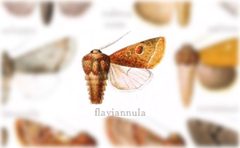
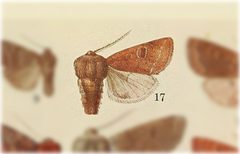
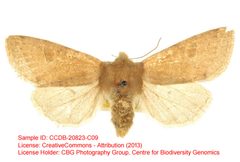
Pronunciation
How to pronounce Orthosia flaviannula: //ɔːrˈθoʊ.si.ə ˌflæ.viˈæn.juː.lə//
These audio files are automatically generated. While they are not always 100% accurate, they are a good starting point.
Images
Distribution
North America. Specific range details beyond continental presence are not documented in available sources.
Seasonality
likely fly in early spring, based on the -level pattern observed in related Orthosia such as O. cerasi and O. gothica, which emerge from March to May.
Similar Taxa
- Orthosia cerasiSimilar early spring period and general ; O. cerasi is one of the most commonly encountered Orthosia in spring and may be confused with less common .
- Orthosia gothicaShares early spring pattern and similar overall appearance; both overwinter as pupae and have comparable size and coloration.
- Orthosia hibisciAnother North American Orthosia with similar and preferences; reliable identification requires examination of genitalia or wing pattern details.
More Details
Taxonomic Note
Originally described as Taeniocampa flaviannula by Smith in 1899. The was later transferred to the Orthosia. The specific epithet flaviannula refers to yellowish (flava) annular markings, though this interpretation is inferred from the Latin root.