
Orthosia hibisci
(Guenée, 1852)
Speckled Green Fruitworm Moth
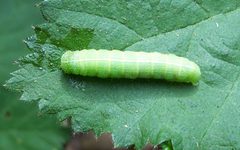
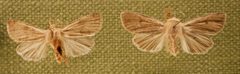
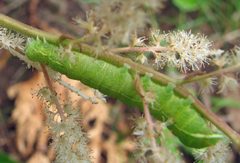
Orthosia hibisci, commonly known as the speckled green fruitworm , is a Noctuidae moth found across most of North America outside desert regions. are active in early spring, with a single per year from late March through April. The species exhibits highly variable forewing coloration and pattern, ranging from pale buff-grey to dark red-brown. Larvae are feeders on hardwood trees and shrubs.
Pronunciation
How to pronounce Orthosia hibisci: /ɔrˈθoʊʃə həˈbɪskaɪ/
These audio files are automatically generated. While they are not always 100% accurate, they are a good starting point.
Identification
Distinguished from similar Orthosia by its early spring period (March–April), highly variable forewing coloration, and geographic distribution across most of North America. The combination of variable forewing pattern (from weakly to strongly banded) and absence from desert regions helps separate it from related species. lack distinctive diagnostic markings that would allow easy separation from some without reference to season and range.
Images
Habitat
Moist forests, riparian areas, agricultural lands, and urban areas. Absent from desert regions. Found in both natural and anthropogenically modified environments.
Distribution
Most of North America, excluding desert regions. Documented from Canada (Alberta, Manitoba, Saskatchewan, Vermont-US) and throughout the United States. Absent from arid southwestern deserts.
Seasonality
active from late March to April in one per year. A few individuals may persist into June in northern latitudes. Overwinters as pupa.
Diet
Larvae feed on various hardwood plants across multiple : Aceraceae (maples), Ericaceae (heathers), Betulaceae (birches), Rhamnaceae (buckthorns), Rosaceae (roses), Caprifoliaceae (honeysuckles), Fagaceae (oaks and beeches), and Salicaceae (willows and poplars). Also reported to feed on some conifers.
Host Associations
- Aceraceae - larval food plantmaples
- Ericaceae - larval food plantheathers
- Betulaceae - larval food plantbirches
- Rhamnaceae - larval food plantbuckthorns
- Rosaceae - larval food plantroses and relatives
- Caprifoliaceae - larval food planthoneysuckles
- Fagaceae - larval food plantoaks and beeches
- Salicaceae - larval food plantwillows and poplars
Life Cycle
(one per year). Overwinters as pupa. emerge in late March to April. laid on plants; larvae feed through growing season. occurs in soil or leaf litter, with pupae remaining through winter.
Behavior
attracted to light. Larvae are feeders on foliage of hardwood trees and shrubs. No other specific documented in available sources.
Ecological Role
Larval stage functions as a herbivore on deciduous trees and shrubs. May occasionally reach pest status in agricultural or orchard settings due to broad range. Serves as prey for various and , though specific documentation lacking.
Human Relevance
Occasional pest of fruit trees and ornamental plants due to larval feeding on foliage. The 'speckled green fruitworm ' reflects its association with fruit production, though it is not among the most economically significant fruitworm . readily attracted to blacklights and porch lights, making them observable by citizen scientists.
Similar Taxa
- Psaphida rolandi (Roland's Sallow)Similar early spring period and Noctuidae membership, but distinguished by association with oak and more restricted eastern distribution
- Other Orthosia species may overlap in range and appearance; O. hibisci distinguished by combination of variable forewing pattern, early spring , and broad North American distribution excluding deserts
More Details
Subspecies
Four recognized: O. h. hibisci; O. h. brucei (Colorado, Alberta); O. h. nubilata (Colorado); and O. h. quinquefasciata (British Columbia, Washington, Oregon, California). Subspecies primarily distinguished by geographic distribution and subtle pattern variations.
Taxonomic History
Originally described as Taeniocampa hibisci by Guenée in 1852; later transferred to Orthosia.