
Orthosia
Ochsenheimer, 1816
early spring millers
Species Guides
19- Orthosia alurina(Gray Quaker)
- Orthosia annulimacula
- Orthosia arthrolita
- Orthosia behrensiana(Behrens' Orthosia)
- Orthosia erythrolita
- Orthosia ferrigera
- Orthosia flaviannula
- Orthosia garmani(Garman's Quaker)
- Orthosia hibisci(Speckled Green Fruitworm Moth)
Orthosia is a of owlet moths (Noctuidae) established by Ferdinand Ochsenheimer in 1816. are active during winter and early spring, earning the group the "early spring millers." The genus includes notable such as the Hebrew character (O. gothica), the common Quaker (O. cerasi), and the speckled green fruitworm (O. hibisci). Species in this genus typically have a single per year, with adults emerging from pupae.
Pronunciation
How to pronounce Orthosia: /ɔrˈθoʊ.si.ə/
These audio files are automatically generated. While they are not always 100% accurate, they are a good starting point.
Identification
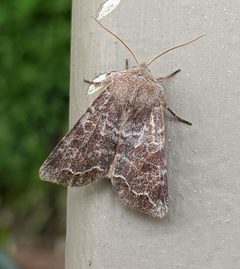
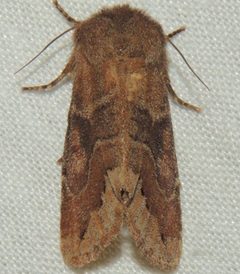
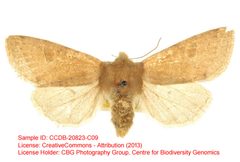
Orthosia are small to medium-sized noctuid with relatively nondescript brown or gray forewings, often featuring darker markings or spots. The Hebrew character is distinguished by a dark triangular or kidney-shaped mark on the forewing resembling a Hebrew letter. The common Quaker shows more uniform pale brown coloration with subtle patterning. The speckled green fruitworm moth has greenish-tinged forewings with scattered dark speckles. Accurate species identification often requires examination of genitalia or reference to geographic and seasonal occurrence data.
Images
Habitat
occur in diverse including deciduous and mixed woodlands, forest edges, orchards, gardens, and open country with scattered trees. The speckled green fruitworm has been documented in forested areas across North America. Several species show affinity for areas with Salix (willow) flowers.
Distribution
The has a Holarctic distribution, with present across Europe, Asia, and North America. The common Quaker and Hebrew character occur throughout the UK and Europe. The speckled green fruitworm ranges across the entire United States and well into western Canada. Specific distribution varies by species.
Seasonality
are active primarily from late winter through early spring, typically March to May in temperate regions, with some persisting into June at northern latitudes. This early period is a defining characteristic of the . Most have a single per year, with adults emerging from pupae.
Diet
Larvae of Orthosia hibisci are feeders on mostly deciduous trees and shrubs, including some conifers. Specific plants for most are poorly documented. have been observed visiting Salix flowers.
Host Associations
- Salix - nectar sourcedocumented trophic relationship with willow flowers
- deciduous trees and shrubs - larval food plant feeding recorded for O. hibisci
- conifers - larval food plantoccasional feeding recorded for O. hibisci
Life Cycle
have a with one per year. are laid in spring on plants. Larvae feed through spring and summer, then pupate in soil or leaf litter. The pupal stage overwinters, with emerging the following winter or early spring. Some individuals may remain in for extended periods.
Behavior
are and readily attracted to artificial light sources, appearing at UV lights and porch lights during their early spring period. Adults of some have been documented feeding on nectar from willow flowers.
Ecological Role
Larvae function as herbivores on woody plants. serve as early-season of Salix and potentially other early-blooming plants. They form part of the for insectivorous bats and birds during a period of low insect availability.
Human Relevance
The speckled green fruitworm (O. hibisci) is occasionally of economic concern as a fruit pest, with larvae feeding on developing fruits. The common Quaker and Hebrew character are familiar to moth enthusiasts and frequently recorded in citizen science monitoring. Early spring makes them notable harbingers of the moth season in temperate regions.
Similar Taxa
More Details
Trophic research
A 2023 study documented a trophic relationship between Salix flowers, Orthosia , and the western barbastelle bat (Barbastella barbastellus), highlighting the ecological importance of these early-season moths.
Nomenclatural note
The name Orthosia has also been used for a of plants in Apocynaceae, but the genus Orthosia Ochsenheimer, 1816 is valid and distinct.