
Psaphida rolandi
Grote, 1874
Roland's Sallow, Roland's Sallow Moth
Psaphida rolandi, commonly known as Roland's Sallow, is a noctuid native to eastern North America. The exhibits a single per year with active in early spring. Larvae are specialized feeders on oak foliage, though they are rarely observed due to their -feeding habits. The species has a notable trait of extended pupal lasting up to seven years.
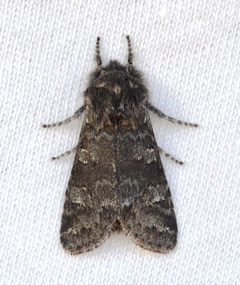
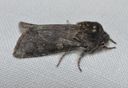
Pronunciation
How to pronounce Psaphida rolandi: /psəˈfaɪdə roʊˈlændi/
These audio files are automatically generated. While they are not always 100% accurate, they are a good starting point.
Identification
are most readily encountered in early spring (February–May), distinguishing them from later-flying noctuids. The combination of early-season period, eastern North American distribution, and association with oak supports identification. Similar spring-flying noctuids in the region include Orthosia hibisci, which has broader plant associations.
Images
Appearance
have a wingspan of approximately 34 mm. Specific coloration and pattern details are not documented in available sources.
Habitat
Associated with oak-dominated forests and woodlands. Larvae feed in the tree . are frequently attracted to artificial light sources at night.
Distribution
Eastern North America from southern Ontario and Quebec south to Florida, extending westward to the eastern fringe of the Great Plains.
Seasonality
are active from February in southern states to May in northern regions. Single per year.
Diet
Larvae feed exclusively on oak (Quercus spp.).
Host Associations
- Quercus - larval food plantsole known ; larvae feed on oak foliage
Life Cycle
Winter is spent in the pupal stage. Pupae can remain in for up to seven years, presumably as an to unfavorable conditions. emerge in early spring, with period ending by May. One per year.
Behavior
are and attracted to light. Larvae are feeders and seldom encountered.
Ecological Role
Larval herbivore on oak; specific ecological impacts or -prey relationships are not documented.
Human Relevance
Occasionally encountered by enthusiasts at blacklight and mercury vapor light setups. Not known to be an agricultural or forest pest.
Similar Taxa
- Orthosia hibisciSimilar early-spring period and noctuid membership; distinguished by broader larval range including multiple deciduous trees and shrubs
More Details
Pupal Diapause
Extended pupal of up to seven years is a notable , though the specific environmental cues triggering remain uncharacterized.