
Psaphida
Walker, 1865
Species Guides
7- Psaphida damalis
- Psaphida electilis(Chosen Sallow)
- Psaphida grandis(Gray Sallow)
- Psaphida resumens(Figure-eight Sallow)
- Psaphida rolandi(Roland's Sallow)
- Psaphida styracis(Fawn Sallow)
- Psaphida thaxterianus(Thaxter's Sallow)
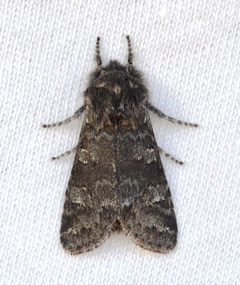
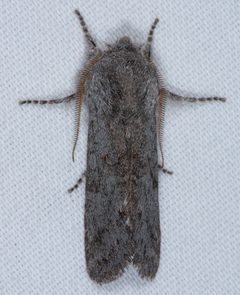
Psaphida is a of owlet moths in the Noctuidae, established by Francis Walker in 1865. in this genus are primarily North American, with most distributed across the eastern and central United States and southern Canada. One species, P. palaearctica, occurs in Shaanxi, China. The genus includes early spring-emerging species such as Roland's Sallow (P. rolandi), which has been documented to exhibit extended pupal lasting up to seven years.
Pronunciation
How to pronounce Psaphida: //ˈsæfɪdə//
These audio files are automatically generated. While they are not always 100% accurate, they are a good starting point.
Images
Distribution
Eastern and central North America, with records from southern Canada (Quebec, Ontario, Manitoba) through the northeastern, midwestern, and southeastern United States, extending west to Texas, Kansas, and the Dakotas. One , P. damalis, occurs in California and Colorado. P. palaearctica is known from Shaanxi Province, China.
Seasonality
of multiple emerge in early spring, with some appearing as early as February in southern states. periods typically end by May or June. Roland's Sallow (P. rolandi) has been observed from February through May in the southern United States.
Host Associations
- Quercus - larval plantOnly known plants for P. rolandi caterpillars; larvae may feed high in and are seldom encountered
Life Cycle
Pupal has been documented in P. rolandi, with individuals remaining in the pupal stage for up to seven years, presumably as an to unfavorable conditions. One per year for P. rolandi.
Behavior
are attracted to artificial light sources at night. Larvae of P. rolandi may feed high in the , making them difficult to encounter.
Similar Taxa
More Details
Taxonomic history
The was erected by Francis Walker in 1865 with Psaphida resumens as the type . The tribe Psaphidini was established to accommodate this and related genera within the Amphipyrinae.
Species diversity
Eight are currently recognized: P. resumens, P. thaxterianus, P. rolandi, P. grandis, P. electilis, P. styracis, P. damalis, and P. palaearctica. The latter, described in 2010, represents the only known Palearctic occurrence of the .