
Amphipyrinae
Guenée, 1837
Tribe Guides
2Amphipyrinae is a of owlet moths (Noctuidae) historically used as a catchall for lacking clear morphological synapomorphies for assignment to other subfamilies. Molecular phylogenetic studies have significantly redefined the group, transferring numerous genera to other subfamilies. Following major revisions, the genus Amphipyra is now the only genus definitively retained in Amphipyrinae. The subfamily currently contains over 50 genera and 210 described , though this classification remains unstable pending further research.
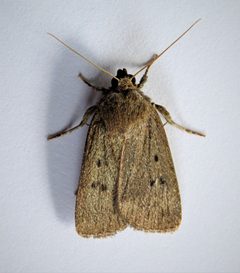
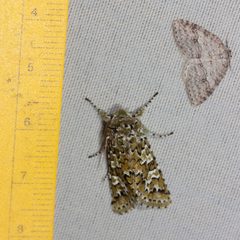
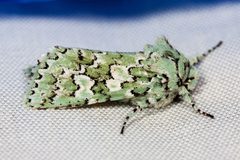
Pronunciation
How to pronounce Amphipyrinae: /ˌæmfɪˈpaɪriːniː/
These audio files are automatically generated. While they are not always 100% accurate, they are a good starting point.
Identification
Amphipyrinae lacks consistent diagnostic morphological features that would allow reliable identification as a cohesive group. Historically, members were assigned to this based on the absence of characteristics defining other noctuid subfamilies rather than shared derived traits. Molecular data are now required for definitive placement. The type Amphipyra can be recognized by features typical of noctuid generally, including stout bodies, dull coloration, and typical forewing venation, but specific distinguishing traits for the subfamily as a whole have not been established.
Images
Distribution
Members of Amphipyrinae occur across multiple continents including North America, Europe, Asia, and Australia. The has a broad geographic range reflecting its historical composition as a polyphyletic of disparate noctuid lineages. Specific distribution data for the redefined subfamily are limited given ongoing taxonomic revisions.
Human Relevance
Some historically classified in Amphipyrinae are agricultural pests. Larvae of certain have been documented feeding on crop plants, though specific pest status for the redefined remains unclear given taxonomic instability. The subfamily has been the focus of intensive phylogenetic research to resolve noctuid classification.
Similar Taxa
- HadeninaeHistorically confused with Amphipyrinae; many former amphipyrine have been transferred to Hadeninae based on molecular data. Both contain stout-bodied noctuids with dull coloration, requiring genetic or detailed morphological analysis for separation.
- NoctuinaeShares general noctuid ; some formerly in Amphipyrinae have been reassigned to Noctuinae. Distinguished by specific forewing venation patterns and genitalic structures in most cases.
- AcronictinaeAustralian sometimes treated as part of Amphipyrinae but now generally recognized as distinct. Acronictinae typically shows more pronounced larval spination and distinct wing patterns.
Misconceptions
A common misconception is that Amphipyrinae represents a natural, . In fact, it has been demonstrated to be massively polyphyletic, with its members scattered across multiple distinct lineages within Noctuidae. The historical use of Amphipyrinae as a default assignment for unplaced has created confusion in the literature regarding the biological characteristics of the group.
More Details
Taxonomic Instability
The classification of Amphipyrinae is undergoing major revision. A 2021 phylogenetic study transferred 11 to six different , and further reassignments are expected. The tribe Psaphidini is sometimes treated as the subfamily Psaphidinae. The subfamily Stiriinae, Grotellinae, and tribe Annaphilini were elevated from subtribes within Amphipyrinae based on molecular evidence.
Molecular Research
Recent studies using seven gene regions (>5,500 ) from over 120 noctuid have provided the first large- molecular of the group. These data have been essential for redefining Amphipyrinae, as morphological synapomorphies were largely absent for many included .
Sources and further reading
- BugGuide
- Wikipedia
- iNaturalist taxon
- NCBI Taxonomy
- Catalogue of Life
- Noctuoidea: Noctuidae: Acontiinae, Agaristinae, Amphipyrinae, Bagisarinae
- Towards Resolving and Redefining Amphipyrinae (Lepidoptera, Noctuoidea, Noctuidae): a Massively Polyphyletic Taxon
- A larval host plant for Annaphila lithosina with notes on the species (Noctuidae: Amphipyrinae)
- Phylogenetic underpinnings of the Acronictinae and Amphipyrinae (Lepidoptera: Noctuidae) and implications for understanding larval and life history evolution in the lower Noctuidae
- Diversity of Noctuid Caterpillars belonging to Subfamily Amphipyrinae, Catocalinae, Cuculiinae, Heliothinae, Noctuinae and Plusiinae on Host Crops/Plants of Jammu & Kashmir State (India)
- Taxonomic review of the genus Clethrorasa Hampson, 1908 (Lepidoptera, Noctuidae, Amphipyrinae), with descriptions of a new genus and a new species from southeastern China.
- Description of a new subgenus for Himalaeabatanga and its new sister species from Xizang Autonomous Region, China (Lepidoptera, Noctuidae, Amphipyrinae, Psaphidini).