
Psaphidini
Grote, 1896
Family Guides
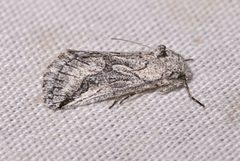
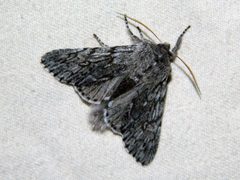
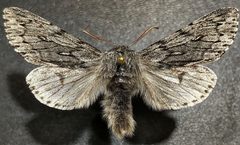
4Psaphidini is a tribe of owlet moths within the Amphipyrinae (Noctuidae). The tribe contains at least 40 and 90 described . Subtribes within Psaphidini include Psaphidina and Triocnemidina, which exhibit distinct morphological specializations and geographic distributions.
Pronunciation
How to pronounce Psaphidini: //sæˈfɪdɪnaɪ//
These audio files are automatically generated. While they are not always 100% accurate, they are a good starting point.
Identification
Within Psaphidini, subtribes can be distinguished by specific morphological characters. Triocnemidina is characterized by modified prothoracic tibial setae (a strong clawlike seta continuous with a knifelike ridge) and distinctive hindwing venation. Psaphidina includes with diagnostic male genitalia features such as an enlarged ampulla in the clasping apparatus and elasmas on the vesica. The combination of robust ampulla with both and elasmas is unique within the tribe.
Images
Habitat
Members occupy diverse including arid shrubland and desert regions (Chihuahuan desert in southwestern North America) and subalpine coniferous forests (northeastern Himalayan region at elevations around 3,200 m).
Distribution
Widespread across the Holarctic region: southwestern United States (Arizona, New Mexico, Texas) and Mexico; Xizang (Tibet) Autonomous Region and Sichuan Province, China.
Seasonality
active from spring through fall in desert regions; collected in August at high-elevation Himalayan sites.
Life Cycle
Early stages unknown for most . of at least one high-elevation species collected at night in August.
Behavior
activity documented through light trapping. The large foretibial claw in Triocnemidina is probably an for escaping the pupal chamber in hard desert soils and digging to the surface.
More Details
Subtribal diversity
Psaphidini comprises at least two subtribes with distinct morphological and geographic patterns: Psaphidina (Himalayan region, forest ) and Triocnemidina (southwestern North American deserts).
Male genitalia diagnostics
Male genitalia provide critical diagnostic features within Psaphidini, including ampulla size and structure, presence and position of elasmas on the vesica, and details of the juxta and .
Sources and further reading
- BugGuide
- Wikipedia
- iNaturalist taxon
- Catalogue of Life
- Description of a new subgenus for Himalaeabatanga and its new sister species from Xizang Autonomous Region, China (Lepidoptera, Noctuidae, Amphipyrinae, Psaphidini).
- A new noctuid genus and species (Lepidoptera, Noctuidae, Amphipyrinae, Psaphidini, Triocnemidina) from New Mexico and Texas, United States of America.