
Triocnemidina
Genus Guides
5Triocnemidina is a subtribe of noctuid in the Noctuidae, Amphipyrinae, tribe Psaphidini. It comprises approximately 16 and at least 30 described , though some sources recognize fewer described species. The subtribe is primarily associated with arid environments in the southwestern United States and Mexico. Members are characterized by distinctive morphological features, particularly modifications of the prothoracic tibia.
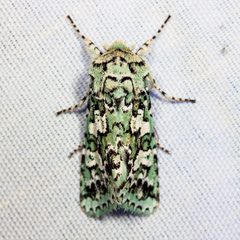
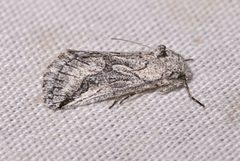
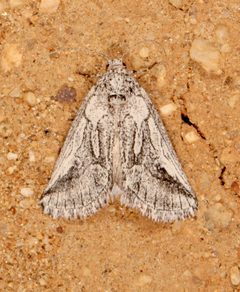
Pronunciation
How to pronounce Triocnemidina: //traɪəˈsnɛmɪdɪnə//
These audio files are automatically generated. While they are not always 100% accurate, they are a good starting point.
Identification
Triocnemidina can be distinguished from related subtribes by a suite of morphological characters: with unmodified and simple or weakly serrate male ; prothoracic tibia with a strong clawlike seta continuous with a knifelike ridge, often with an accessory claw; hindwing cross mdc with concave segment and laterally-directed angle at strong M2; abdominal with weak wall and well-developed lever; male A7 large, thickly sclerotized, with weakly bilobed distal margin; male valve simple with porrect spinelike ampulla of the clasper arising near the margin and hairlike setae but no corona on the unmodified cucullus; male phallus with tubular vesica bearing one or two patches of spinelike setae set on crenulate bands; female bursa copulatrix simple with or without segmented bandlike signum; and external with large hood with large ovate or rectangular bulla.
Images
Habitat
Desert environments, specifically arid shrubland in the Chihuahuan desert region and adjacent areas.
Distribution
Southwestern United States (Arizona, New Mexico, Texas) and Mexico.
Seasonality
fly from spring to fall for at least one ; another species is restricted to spring period. Specific seasonality for most species is unknown.
Life Cycle
Early stages (, larvae, pupae) are unknown for most or all . are the only documented life stage.
Behavior
The large foretibial claw is probably an to allow to escape from the pupal chamber in hard desert soils and dig their way to the ground surface.
More Details
Taxonomic History
The subtribe was originally described by Poole (1995) as a tribe of Psaphidinae and later revised to its current subtribal status within Psaphidini.
Species Richness
There is some discrepancy in counts: Wikipedia reports about 16 and at least 30 described species, while a 2024 taxonomic revision recognized eight described and three undescribed species in seven genera, with each genus containing only one or two species.
New Taxa
The Poolea was described in 2024 for two from the southwestern United States, bringing the total recognized genera to at least 16.