
Euxoa siccata
Smith, 1893
Euxoa siccata is a of owlet moth in the Noctuidae, first described by Smith in 1893. It is found in North America, with documented occurrences in Alberta, Canada and Colorado, United States. The species has a wingspan of approximately 30 mm. As a member of the Euxoa, its larvae are likely cutworms, though specific details for this species remain poorly documented.
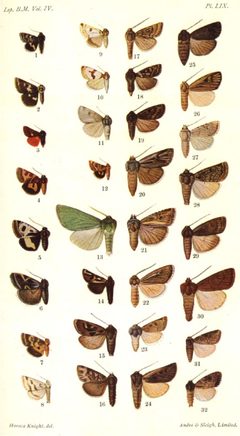
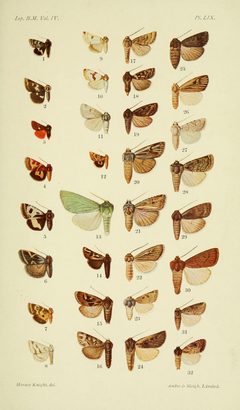
Pronunciation
How to pronounce Euxoa siccata: /juːkˈsoʊə sɪˈkeɪtə/
These audio files are automatically generated. While they are not always 100% accurate, they are a good starting point.
Identification
Euxoa siccata can be distinguished from similar Euxoa by geographic range and possibly subtle morphological features, though specific diagnostic characters are not well documented in available literature. The species occurs in Alberta and Colorado, which may help narrow identification within the . Accurate identification likely requires examination of genitalia or reference to specialized taxonomic keys for North American Noctuidae.
Images
Appearance
have a wingspan of approximately 30 mm. As a noctuid , adults likely have stout bodies and relatively dull coloration typical of the . Specific wing patterns, coloration, and larval for this are not well described in available sources.
Habitat
Specific preferences for Euxoa siccata are not documented. Based on its distribution in Alberta and Colorado, the likely inhabits open grassland, prairie, or montane environments. Many Euxoa species are associated with agricultural fields, grasslands, and disturbed habitats where their larval plants occur.
Distribution
North America, specifically documented from Alberta, Canada and Colorado, United States. The full extent of its range is likely broader but poorly sampled.
Ecological Role
As a member of the Noctuidae , larvae likely function as herbivores consuming plant material, and may serve as prey for including birds, bats, and other arthropods. Specific ecological roles for this have not been documented.
Similar Taxa
- Euxoa auxiliaris, a closely related and much better studied Euxoa with overlapping western North American distribution. E. auxiliaris is a major agricultural pest with documented migratory and thermal , whereas E. siccata lacks such detailed study.
- Euxoa mimallonisRuddy-winged dart, another Euxoa found in western North America including Colorado. Distinguished by more complete documentation of appearance and seasonal activity.
- Other Euxoa speciesThe Euxoa contains numerous similar-appearing , many of which require genitalia dissection or molecular analysis for reliable identification. E. siccata is among the less studied members of this taxonomically challenging genus.
More Details
Taxonomic status
Euxoa siccata is recognized as a valid in major taxonomic databases including Catalogue of Life, GBIF, and NCBI , with consistent authorship as Smith, 1893. However, it has received minimal research attention compared to economically important .
Data deficiency
This exemplifies the many under-studied Noctuidae where basic biological information— plants, larval , , and ecological requirements—remain unknown despite valid taxonomic status.
Sources and further reading
- BugGuide
- Wikipedia
- GBIF taxonomy match
- iNaturalist taxon
- NCBI Taxonomy
- Catalogue of Life
- Aboveground Pests - AgriLife Extension Entomology
- Stem- and Leaf- Feeding Insects - AgriLife Extension Entomology
- Bug Eric: Winter 'pillars
- How Army Cutworm Moths Bounce Between Midwest Heat and Alpine Cool
- Bug Eric: My Kind of Fourth of July
- Bug Eric: July 2019