
Euxoa mimallonis
(Grote, 1873)
Sordid Dart, Ruddy-winged Dart
Euxoa mimallonis is a noctuid known by the Sordid Dart and Ruddy-winged Dart. The occurs across North America with a broad transcontinental range spanning from the Atlantic to the Pacific coasts. are active from July through September, with a single per year. The species belongs to a containing numerous species, though specific larval for this species is not well documented.
Pronunciation
How to pronounce Euxoa mimallonis: //juːkˈsoʊ.ə mɪmɐlˈoʊnɪs//
These audio files are automatically generated. While they are not always 100% accurate, they are a good starting point.
Identification
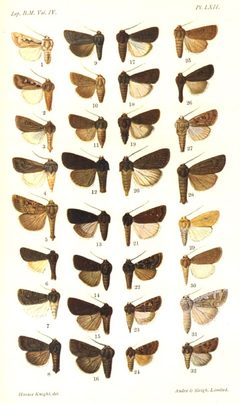
The 'Ruddy-winged Dart' suggests reddish or ruddy coloration in the wings that may help distinguish this from similar Euxoa species. The 'dart' ( Euxoa and related noctuids) are notoriously difficult to identify to species without examination of genitalia or detailed wing pattern analysis. Euxoa mimallonis can be distinguished from the superficially similar () by geographic overlap and ; E. auxiliaris is primarily a western species with different seasonal activity patterns and is associated with distinct migratory not reported for E. mimallonis.
Images
Habitat
Occurs in a variety of open across its broad range, likely including grasslands, meadows, agricultural fields, and open woodlands. Specific habitat preferences are not well documented, but the ' wide distribution suggests ecological flexibility.
Distribution
North America: Nova Scotia west to coastal British Columbia; south in the east to Michigan and Minnesota; in the west to central California and New Mexico. Canadian records include Alberta, Manitoba, and Saskatchewan. Two recognized: E. m. mimallonis (eastern) and E. m. gagates (western United States).
Seasonality
are on wing from July to September. One per year ().
Life Cycle
One per year. laid in late summer; larvae likely overwinter. occurs in soil. emerge mid-summer. Specific details of larval development and stage are not documented for this .
Behavior
are and attracted to light. Specific such as , courtship, or larval activity patterns are not documented in available sources.
Ecological Role
As a member of the cutworm moth Euxoa, larvae likely function as herbivores in soil and ground-level . may serve as prey for bats, birds, and other . Specific ecological roles for this are not documented.
Human Relevance
Not a documented agricultural pest. The related () is a major crop pest, but E. mimallonis lacks records of significant economic damage. Attracted to artificial light sources in residential areas.
Similar Taxa
- Euxoa auxiliaris (Army Cutworm)Similar size and general appearance, but E. auxiliaris is primarily western, has distinctive migratory to alpine areas, and is a major agricultural pest. E. mimallonis lacks documented and has a broader transcontinental distribution.
- Other Euxoa speciesThe Euxoa contains numerous cryptic requiring genital dissection or molecular analysis for reliable identification. Wing patterns alone are often insufficient.
More Details
Taxonomic History
First described by Smith in 1890, though the accepted authority is now cited as Grote, 1873. The has undergone taxonomic revision, with gagates described for western .
Research Gaps
Larval plants, specific requirements, and detailed remain undocumented for this . Most available information pertains to the Euxoa collectively rather than this specific species.
Sources and further reading
- BugGuide
- Wikipedia
- GBIF taxonomy match
- iNaturalist taxon
- NCBI Taxonomy
- Aboveground Pests - AgriLife Extension Entomology
- Stem- and Leaf- Feeding Insects - AgriLife Extension Entomology
- Bug Eric: My Kind of Fourth of July
- Bug Eric: July 2019
- Bug Eric: Winter 'pillars
- How Army Cutworm Moths Bounce Between Midwest Heat and Alpine Cool