
Euxoa inconcinna
Harvey, 1875
cutworm, dart moth
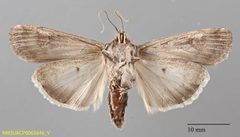
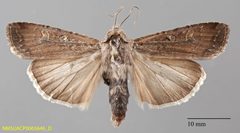
Euxoa inconcinna is a of cutworm moth in the Noctuidae. It is found in North America and has been recorded in Colorado. The species is part of a large of dart moths, many of which are agricultural pests as larvae. are attracted to light sources.
Pronunciation
How to pronounce Euxoa inconcinna: /juˈksɔ.a ɪn.kənˈsɪ.nə/
These audio files are automatically generated. While they are not always 100% accurate, they are a good starting point.
Identification
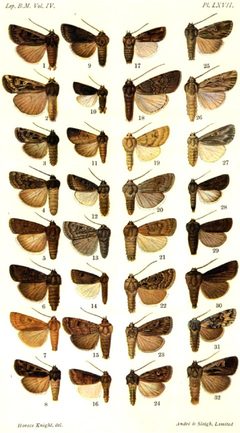
Euxoa inconcinna can be distinguished from similar dart moths by genitalia examination or molecular analysis. External is similar to other Euxoa , which are notoriously difficult to identify to species level based on appearance alone. The species may be separated from Euxoa messoria and Euxoa ochrogaster by subtle differences in wing pattern and genitalia structure. Identification typically requires dissection and comparison with reference specimens or use of diagnostic molecular markers.
Images
Habitat
Found in open including grasslands, prairies, meadows, and agricultural fields. Larval habitat includes soil surface and plant root zones. are often found near larval plants and are attracted to artificial light sources in urban and rural settings.
Distribution
North America. Recorded from Colorado and other western states. The Euxoa is broadly distributed across North America, with individual ranges varying.
Seasonality
are active during summer months. Larvae likely overwinter and resume feeding in spring, with occurring in early summer. As with other Euxoa , adults may be attracted to lights from late spring through summer.
Life Cycle
are laid on soil or plant stems. Larvae hatch and feed on plant tissues, as partially grown caterpillars. They resume feeding in spring, pupate in soil, and emerge as . The likely takes one year to complete, though this has not been explicitly documented for this .
Behavior
are and attracted to light. Larvae are nocturnal feeders that hide in soil or under debris during daylight hours. When disturbed, larvae curl into a characteristic C-shape for protection.
Ecological Role
Larvae function as herbivores, consuming plant material. They likely serve as prey for birds, small mammals, , and other insect . may contribute to pollination through incidental nectar feeding.
Human Relevance
As a , larvae may damage agricultural crops by cutting stems at or below the soil surface, though specific pest status for E. inconcinna is not well documented. The species is part of a containing several significant agricultural pests.
Similar Taxa
- Euxoa auxiliaris (Army Cutworm)Similar appearance and , but E. auxiliaris is larger, has a distinct to alpine areas, and is a more significant agricultural pest with documented mass .
- Euxoa messoriaOverlapping range and similar ; requires genitalia dissection for reliable separation.
- Euxoa ochrogasterAnother widespread Euxoa with similar larval ; differ subtly in wing pattern.
More Details
Taxonomic Note
Euxoa is a large and taxonomically challenging with many cryptic . Euxoa inconcinna was described by Harvey in 1875. The species is not among the most frequently studied Euxoa, and much of its is inferred from better-known .
Research Gaps
Detailed studies, plant specificity, and economic impact assessments specific to E. inconcinna are lacking in the literature. Most biological information is generalized from the level.
Sources and further reading
- BugGuide
- Wikipedia
- GBIF taxonomy match
- iNaturalist taxon
- NCBI Taxonomy
- Aboveground Pests - AgriLife Extension Entomology
- Stem- and Leaf- Feeding Insects - AgriLife Extension Entomology
- Bug Eric: Winter 'pillars
- How Army Cutworm Moths Bounce Between Midwest Heat and Alpine Cool
- Bug Eric: My Kind of Fourth of July
- Bug Eric: July 2019