
Euxoa messoria
(Harris, 1841)
darksided cutworm, reaper dart
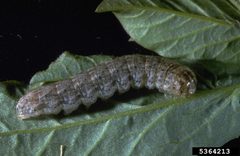
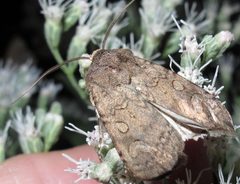
Euxoa messoria, commonly known as the darksided or reaper dart, is a noctuid first described by Thaddeus William Harris in 1841. The species has a broad North American distribution spanning from Newfoundland to Yukon and south to Virginia, Missouri, New Mexico, Arizona, and California. are active from July to September with one per year. The larval stage is a cutworm that feeds on leaves of apple, cultivated vegetables, flowers, and various other plants, occasionally causing agricultural damage.
Pronunciation
How to pronounce Euxoa messoria: /juːkˈsoʊ.ə məˈsɔr.i.ə/
These audio files are automatically generated. While they are not always 100% accurate, they are a good starting point.
Identification
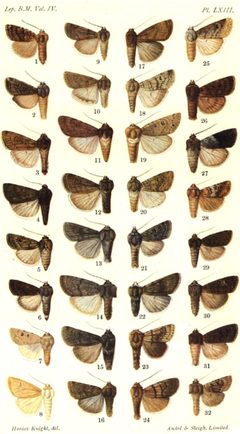
can be distinguished from similar Euxoa by forewing pattern and geographic distribution, though precise diagnostic features require examination of genitalia. The darksided appearance of the forewings provides a field clue. Larvae are difficult to distinguish from other Euxoa cutworms without rearing to adulthood; they lack the distinctive features of some related species such as the greasy appearance of (Euxoa auxiliaris) larvae.
Images
Habitat
Found in diverse terrestrial including agricultural fields, gardens, orchards, and natural grasslands. Larvae occur in soil or at the soil surface; are and attracted to light. The shows adaptability to both cultivated and uncultivated environments.
Distribution
North America: Newfoundland west to Yukon, south to Virginia and Missouri in the east, and New Mexico, Arizona, and California in the west. Canadian provinces with records include Alberta, Manitoba, and Saskatchewan. Present in Vermont.
Seasonality
fly from July to September depending on location. One per year (). Larvae are present in spring and early summer, feeding until .
Diet
Larvae feed on leaves of apple (Malus), cultivated vegetables, flowers, and various other plants. herbivore. Specific feeding habits not documented; likely feeds on nectar if at all.
Host Associations
- Malus - larval food plantapple
- cultivated vegetables - larval food plantvarious
- cultivated flowers - larval food plantvarious
- various other plants - larval food plant feeding
Life Cycle
Complete with one per year. laid in soil or on vegetation. Larvae hatch and feed on plant leaves, as partially grown larvae in soil or under debris. Development resumes in spring; larvae pupate in soil in early summer. emerge in mid-summer (July–September).
Behavior
Larvae are feeders, hiding in soil or under debris during daylight hours. When disturbed, larvae exhibit typical of curling into a tight C-shape. are nocturnal and attracted to light sources. are active fliers during the evening and night.
Ecological Role
Larval stage functions as a herbivore, consuming plant foliage. Serves as prey for various natural enemies including parasitic , predatory insects, birds, and other vertebrates. may contribute to pollination if nectar-feeding occurs. Not a but part of general noctuid in North American .
Human Relevance
Occasional agricultural pest. Larvae can damage apple orchards, vegetable crops, and ornamental plantings by feeding on leaves. Damage is typically sporadic and rarely reaches economically significant levels requiring intervention. Management, when needed, follows standard control practices including cultural controls and targeted applications.
Similar Taxa
- Euxoa auxiliaris; larvae have distinctive shiny or greasy appearance and are more severe agricultural pests; are larger and known for mass to alpine areas
- Euxoa mimallonisRuddy-winged dart; similar size and general appearance but with different forewing coloration (more tones) and somewhat overlapping but more restricted distribution
- Other Euxoa speciesMany Euxoa are morphologically similar; accurate identification often requires examination of male genitalia or molecular methods
- Agrotis speciesOther share similar larval habits and general appearance; Agrotis larvae typically have more distinct markings and different setal arrangements
More Details
Taxonomic history
First described by Thaddeus William Harris in 1841, a prominent early American entomologist. The has undergone no major taxonomic revisions and remains in the Euxoa.
Research needs
Detailed studies of larval , precise plant range, and economic impact assessments are lacking in published literature. Most information is derived from general references on pests rather than -specific research.
Sources and further reading
- BugGuide
- Wikipedia
- GBIF taxonomy match
- iNaturalist taxon
- NCBI Taxonomy
- Aboveground Pests - AgriLife Extension Entomology
- Stem- and Leaf- Feeding Insects - AgriLife Extension Entomology
- Bug Eric: Winter 'pillars
- How Army Cutworm Moths Bounce Between Midwest Heat and Alpine Cool
- Bug Eric: My Kind of Fourth of July
- Bug Eric: July 2019