
Euxoa bostoniensis
Grote, 1874
Boston dart, drab cutworm
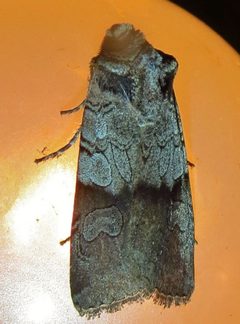
Euxoa bostoniensis, commonly known as the Boston dart or drab , is a noctuid found in eastern and central North America. have a wingspan of 40–45 mm and are active in May and again from September to October. The larvae are cutworms that feed on Nicotiana species, though the species occurs in areas where tobacco is not cultivated.

Pronunciation
How to pronounce Euxoa bostoniensis: //juːkˈsoʊ.ə bɒˌstoʊniˈɛn.sɪs//
These audio files are automatically generated. While they are not always 100% accurate, they are a good starting point.
Identification
can be distinguished from similar Euxoa by geographic range and period (May, and September–October). The drab, unmarked appearance is typical of many Euxoa species, requiring genitalia examination or molecular methods for definitive identification. The larvae are indistinguishable from other species without rearing to adults.
Images
Habitat
Found in a variety of open including agricultural fields, meadows, and disturbed areas. The has been recorded in both tobacco-growing regions and areas where tobacco does not occur.
Distribution
Eastern and central North America: from Ontario and Maine south to North Carolina, west to Missouri and Michigan. Disjunct records from Florida, California, and South Dakota suggest occasional vagrant occurrences or possible misidentifications.
Seasonality
are on wing in May and again from September to October. with two distinct periods per year.
Diet
Larvae feed on Nicotiana (tobacco and relatives). The species has been documented in areas where tobacco does not grow, indicating either use of alternative or from tobacco-growing regions.
Host Associations
- Nicotiana - larval food plantPrimary documented ; specific Nicotiana not specified in sources
Life Cycle
Complete with , larva, pupa, and stages. Larvae are the stage, feeding in spring before pupating in soil. Adults emerge in May; second adults appear September–October.
Behavior
are and attracted to light. Larvae are nocturnal feeders, hiding in soil or debris during daylight hours. When disturbed, larvae curl into a characteristic C-shape.
Ecological Role
Larval stage functions as a herbivore, consuming plant . As a , it can act as a seedling pest, severing plant stems at or below the soil surface. Serves as prey for and .
Human Relevance
Minor agricultural pest of tobacco. The "drab " reflects its status as a cutworm of limited economic importance compared to more damaging .
Similar Taxa
- Euxoa messoriaSimilar drab appearance and overlapping range; requires genitalia dissection for separation
- Euxoa ochrogasterAnother Euxoa with similar and preferences
- Agrotis ipsilonBlack cutworm has similar larval habits but larger size and different markings
More Details
Sources and further reading
- BugGuide
- Wikipedia
- GBIF taxonomy match
- iNaturalist taxon
- NCBI Taxonomy
- Catalogue of Life
- Aboveground Pests - AgriLife Extension Entomology
- Stem- and Leaf- Feeding Insects - AgriLife Extension Entomology
- Bug Eric: Winter 'pillars
- How Army Cutworm Moths Bounce Between Midwest Heat and Alpine Cool
- Bug Eric: My Kind of Fourth of July
- Bug Eric: July 2019