
Euxoa atristrigata
Smith, 1890
Euxoa atristrigata is a noctuid described by Smith in 1890. It occurs in western North America from British Columbia and Saskatchewan southward to California. As a member of the Euxoa, its larvae likely share the habit of feeding at or below the soil surface on plant stems, though species-specific remains poorly documented.

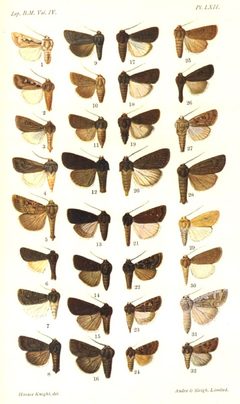
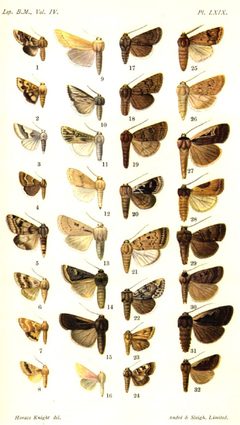
Pronunciation
How to pronounce Euxoa atristrigata: /ˈjuːk.soʊ.ə ˌæ.trɪ.strɪˈɡeɪ.tə/
These audio files are automatically generated. While they are not always 100% accurate, they are a good starting point.
Identification
Euxoa atristrigata can be distinguished from similar Euxoa by examining genitalic characters and forewing pattern details. The specific epithet "atristrigata" (meaning "black-striped") suggests dark longitudinal markings on the forewings, though precise diagnostic features require reference to original description or revisionary works. Separation from Euxoa messoria and other western Euxoa species typically requires dissection and comparison of male genitalia structure.
Images
Distribution
British Columbia and Saskatchewan, Canada, south to California, United States.
Similar Taxa
- Euxoa messoriaOverlaps in western North American range; similar forewing pattern requires genital dissection for reliable separation
- Euxoa auxiliarisShares larval habits and western distribution, but differ in size and wing pattern; E. auxiliaris is notably larger and has distinct not reported for E. atristrigata
Sources and further reading
- BugGuide
- Wikipedia
- GBIF taxonomy match
- iNaturalist taxon
- NCBI Taxonomy
- Catalogue of Life
- Aboveground Pests - AgriLife Extension Entomology
- Stem- and Leaf- Feeding Insects - AgriLife Extension Entomology
- Bug Eric: Winter 'pillars
- How Army Cutworm Moths Bounce Between Midwest Heat and Alpine Cool
- Bug Eric: My Kind of Fourth of July
- Bug Eric: July 2019