
Anicla tepperi
(Smith, 1888)
Black-girdled Dart
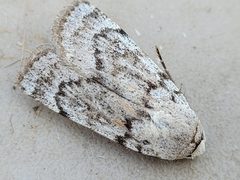
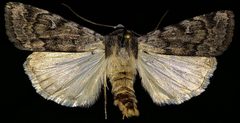
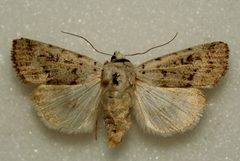
Anicla tepperi is a in the Noctuidae, commonly known as the Black-girdled Dart. The occurs in central North America, ranging from eastern Manitoba and the Alberta foothills south to southern Colorado. have a wingspan of 36–40 mm and fly from June to July. The larvae feed on grasses in the family Poaceae.
Pronunciation
How to pronounce Anicla tepperi: /ˈænɪklə ˈtɛpɛraɪ/
These audio files are automatically generated. While they are not always 100% accurate, they are a good starting point.
Identification
The Black-girdled Dart can be distinguished from similar noctuid by its specific geographic range in the central Great Plains and Rocky Mountain foothills. The combination of size (36–40 mm wingspan), period (June–July), and grassland helps separate it from related Anicla and other dart moths. Definitive identification requires examination of genitalia or reference to regional faunal works.
Images
Appearance
have a wingspan of 36–40 mm. As a member of Noctuidae, the forewings are likely dull-colored with characteristic noctuid patterning, though specific markings are not detailed in available sources. The 'Black-girdled Dart' suggests a dark band or marking across the wings or body.
Habitat
Grassland and prairie , including native prairies and grassy areas. The larval plants (grasses in Poaceae) indicate open, herbaceous environments. The occurs from lowland plains to foothill elevations.
Distribution
North America: eastern Manitoba west to the Alberta foothills, north to approximately Lloydminster (Alberta/Saskatchewan border region), and south to southern Colorado. Records exist from Alberta, Saskatchewan, Manitoba (Canada) and Colorado (USA).
Seasonality
are active from June to July, with exact timing varying by location. The has one per year ().
Diet
Larvae feed on grasses ( Poaceae). feeding habits are not documented.
Host Associations
- Poaceae - larval plantgrasses
Life Cycle
One per year. Larvae develop on grasses; and stage not specified in sources.
Behavior
are and attracted to light. They fly during the summer months in their prairie .
Ecological Role
Larval herbivore on grasses; contributes to nutrient cycling in grassland . may serve as prey for including bats and birds.
Human Relevance
Minor potential as a pest of turf or pasture grasses, though no economic damage has been documented. Of interest to lepidopterists and prairie ecologists.
Similar Taxa
- Anicla infectaSimilar size and preference; Green Cutworm Moth has different coloration and more eastern/widespread distribution
- Other Anicla species members share grass-feeding larvae and similar ; geographic range and period help distinguish A. tepperi
- Agrotis speciesFormerly classified in Agrotis; similar 'dart moth' appearance requires careful examination for separation