
Agrotis vetusta
Walker, 1856
Old Man Dart, Spotted-legged Cutworm, Muted Dart (for subspecies A. v. mutata)
Agrotis vetusta is a medium-sized noctuid commonly known as the Old Man Dart or Spotted-legged . have a wingspan of 35–42 mm and are active from August to September. The is notable for its broad North American distribution spanning from southern Alaska to Nova Scotia and southward into Mexico. Larvae are cutworms that feed on forbs, vegetables, and row crops, occasionally causing agricultural damage. Three are recognized, with A. v. mutata restricted to western .
Pronunciation
How to pronounce Agrotis vetusta: /ˈæɡroʊtɪs vɪˈtʌstə/
These audio files are automatically generated. While they are not always 100% accurate, they are a good starting point.
Identification
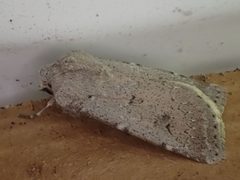
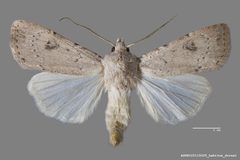
can be distinguished from similar Agrotis by the combination of moderate size (wingspan 35–42 mm), relatively plain gray-brown forewings with subtle patterning, and pale hindwings. The A. v. mutata (west of Manitoba) tends to show reduced or muted patterning compared to nominate A. v. vetusta. Larvae are not readily distinguishable from other Agrotis cutworms without molecular or rearing-based identification; the 'spotted-legged' refers to a subtle trait not always visible. Similar species include Agrotis ipsilon (Ipsilon Dart), which has more contrasting black markings on forewings, and Agrotis orthogonia (Pale Western Cutworm), which occurs in drier and has paler coloration.
Images
Habitat
Found in diverse open including grasslands, agricultural fields, meadows, and disturbed areas. are attracted to light. Larvae occur in soil or under debris in fields and grassy areas.
Distribution
North America: southern Alaska through Canada (Alberta, Manitoba, Nova Scotia, Saskatchewan, Vermont) to Mexico. Three show geographic structuring: A. v. vetusta (eastern and northern), A. v. catenuloides (Great Basin), and A. v. mutata (western, from Manitoba to British Columbia).
Seasonality
active August to September, with exact timing varying by latitude and elevation. Single-brooded () throughout most of range. Larvae present spring through early summer, as small larvae or pupae.
Diet
Larvae feed on various forbs, vegetables, and row crops. ; specific plant records include multiple agricultural crops and weedy vegetation. do not feed.
Host Associations
- various forbs - larval food plant herbivory
- vegetables - larval food plantagricultural pest status
- row crops - larval food planteconomic damage documented
Life Cycle
Complete . laid in soil or on vegetation. Larval development occurs through spring and early summer, with larvae hiding in soil or debris during day and feeding at night. occurs in soil in early summer. emerge late summer; and attracted to light. stage varies: small larvae in soil or clumps of grass, or as pupae.
Behavior
. attracted to ultraviolet and visible light sources. Larvae exhibit typical : soil-dwelling, emerging at night to feed on plant stems and foliage, curling into C-shape when disturbed. Larvae are surface feeders or subterranean depending on instar and conditions.
Ecological Role
Larvae function as herbivores and occasional agricultural pests. serve as prey for including bats and birds. Contributes to nutrient cycling through larval soil activity. Part of the diverse guild that influences plant structure in grassland and agricultural .
Human Relevance
Minor agricultural pest. Larvae can damage vegetable crops and row crops by cutting stems at or below soil surface. Damage typically localized and less severe than that caused by related such as Agrotis ipsilon or Agrotis orthogonia. Management through standard control practices: weed management, seedbed preparation, and targeted applications when warranted.
Similar Taxa
- Agrotis ipsilonSimilar size and general appearance; distinguished by more pronounced black markings on forewings including distinct black dagger-shaped stigmata and more contrasting pattern overall.
- Agrotis orthogoniaPale Western Cutworm occurs in drier western ; larvae are strictly subterranean and paler in color; have more uniform pale gray forewings.
- Euxoa speciesRelated noctuine with similar larvae; Euxoa often show more contrasting forewing patterns with better-defined and spots.
More Details
Subspecies variation
Three recognized based on geographic and subtle morphological differences. A. v. mutata shows reduced wing patterning ('muted') and occupies western range; A. v. catenuloides is restricted to Great Basin; nominate A. v. vetusta occurs in eastern and northern portions of range.
Nomenclatural note
Original description by Walker in 1856 (sometimes cited as 1865 in secondary sources). Basionym Mythimna vetusta reflects older generic placement.
Sources and further reading
- BugGuide
- Wikipedia
- GBIF taxonomy match
- iNaturalist taxon
- NCBI Taxonomy
- Catalogue of Life
- Congrats to Antoine Abrieux, Innovator Fellow Award | Bug Squad
- Occasional Pests - AgriLife Extension Entomology
- Encyrtid Holdings | Entomology Research Museum
- Stem- and Leaf- Feeding Insects - AgriLife Extension Entomology
- Insect-resistant Maize Could Increase Yields and Decrease Pesticide Use in Mexico
- Bug Eric: Last Night to Blacklight?