
Lasionycta caesia
Crabo & Lafontaine, 2009
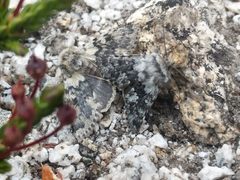
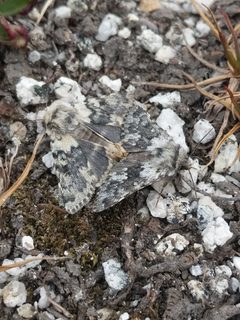
Lasionycta caesia is a noctuid restricted to high-elevation alpine in the Pacific Northwest. It was described in 2009 as part of a comprehensive revision of the Lasionycta. The occurs exclusively in rocky alpine tundra near tree line in the Cascade Mountains of northern Washington and the British Columbia Coast Range, extending north to 58° latitude. are active for a brief period from mid-July to mid-August.
Pronunciation
How to pronounce Lasionycta caesia: /ˌlæsiˈɒnɪktə ˈsiːʒə/
These audio files are automatically generated. While they are not always 100% accurate, they are a good starting point.
Identification
Distinguished from other Lasionycta by its restricted alpine in the Cascade Mountains and British Columbia Coast Range. The 2009 revision of the (ZooKeys 30) provides the definitive taxonomic treatment with keys and illustrations for all 43 species in the genus.
Images
Appearance
Wingspan 30–34 mm in males, 32–35 mm in females. Specific coloration and pattern details are not documented in available sources.
Habitat
Rocky alpine tundra near tree line. Occurs in high-elevation mountainous terrain with sparse vegetation and exposed rock substrates.
Distribution
to the Pacific Northwest: Cascade Mountains of northern Washington and British Columbia Coast Range, extending north to 58° latitude.
Seasonality
on wing from mid-July to mid-August. activity pattern.
Behavior
. Activity period restricted to approximately one month during mid-summer.
Similar Taxa
- Other Lasionycta speciesThe Lasionycta contains 43 in North America, many with overlapping morphological features. L. caesia is distinguished by its geographic restriction to the Cascade Mountains and British Columbia Coast Range alpine zone.
More Details
Taxonomic history
Lasionycta caesia was described as one of 17 new in the 2009 revision of the Lasionycta by Crabo and Lafontaine (ZooKeys 30:1–156). This comprehensive treatment significantly expanded the known diversity of the genus, which previously contained 26 recognized species.