
Lasionycta
Aurivillius, 1892
Species Guides
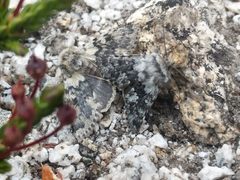
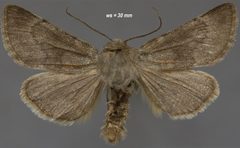
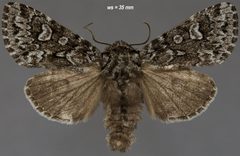
20Lasionycta is a of noctuid comprising approximately 60 described , with the majority distributed across northern North America and Eurasia. The genus was revised in 2009, resulting in the description of 17 new species and the transfer of several species to the genus Psammopolia. Species within Lasionycta are primarily associated with alpine, subalpine, and . are typically small to medium-sized noctuid moths with relatively nondescript brown or gray coloration.
Pronunciation
How to pronounce Lasionycta: //læsiˈɒnɪktə//
These audio files are automatically generated. While they are not always 100% accurate, they are a good starting point.
Identification
Lasionycta are distinguished from related noctuid by genitalic characters, particularly the structure of the male clasping apparatus and female ostium. The 2009 revision by Crabo and Lafontaine provides comprehensive keys to all species based on external and genitalia. Many species are cryptic in appearance, requiring dissection for reliable identification. The genus is most readily separated from the similar Psammopolia by differences in male genitalia structure and forewing pattern elements.
Images
Habitat
of Lasionycta are predominantly associated with high-elevation and high-latitude environments. Many species inhabit alpine tundra, subalpine meadows, forests, and taiga . The includes species adapted to cold climates, with several known from Arctic and subarctic regions. Specific associations vary by species, with some restricted to rocky alpine slopes and others occurring in forested or wetland habitats.
Distribution
The has a Holarctic distribution, with the greatest in North America. Records exist from Alaska, Canada, the western United States, and across northern Eurasia including Scandinavia, Russia, and Siberia. Specific distribution data varies by , with many having restricted ranges in mountainous regions of western North America.
Human Relevance
Lasionycta is of primary interest to lepidopterists and systematists. The 2009 revision in ZooKeys represents a significant contribution to North American noctuid , providing standardized identification resources. The has no known economic importance.
Similar Taxa
- PsammopoliaFormerly included now transferred to Psammopolia; distinguished by male genitalia structure and forewing pattern
- XylenaSimilar noctuid ; Lasionycta are generally smaller with different forewing pattern elements
More Details
Taxonomic revision
A comprehensive revision of Lasionycta was published in ZooKeys 30 (December 2009) by Crabo and Lafontaine, covering 43 with descriptions and illustrations of 17 new species.
Species transfers
Lasionycta arietis, L. insolens, L. ochracea, L. sala, and L. wyatti have been transferred to the Psammopolia based on revised morphological analysis.