
Globia oblonga
Grote, 1882
Oblong Sedge Borer Moth, oblong sedge borer
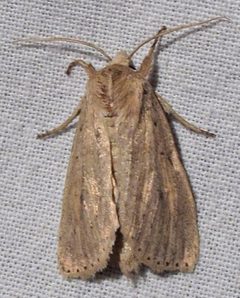
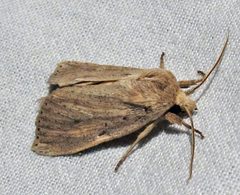
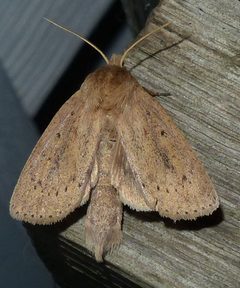
Globia oblonga is a noctuid commonly known as the oblong sedge borer. First described by Grote in 1882, this was formerly placed in the Capsula before that name was abandoned due to a homonym conflict with a mollusk genus. The species is notable for its specialized larval : early instars are leaf miners on emergent aquatic plants, while later instars transition to stem-boring below the water line. are medium-sized moths with wingspans of 35–50 mm.
Pronunciation
How to pronounce Globia oblonga: /ˈɡloʊ.bi.ə ɒbˈlɒŋ.ɡə/
These audio files are automatically generated. While they are not always 100% accurate, they are a good starting point.
Identification
The combination of association with Typha and Scirpus stands, period from June through September, and geographic range across southern Canada and into the United States provides useful context for identification. The was formerly classified under Capsula and may appear in older literature under that or as Archanara oblonga. Larval identification is facilitated by the distinctive feeding habit: initial leaf mining followed by aquatic stem boring below the water line on cattails and bulrushes.
Images
Appearance
Medium-sized with wingspan 35–50 mm. have relatively plain, earth-toned forewings typical of many noctuids. The specific epithet "oblonga" likely refers to the somewhat elongated wing shape or body form. No distinctive color patterns or markings are prominently documented in available sources.
Habitat
Wetland and aquatic edge dominated by emergent macrophytes, particularly stands of cattails (Typha ) and bulrushes (Scirpus species). Larvae require access to standing water where they can bore stems below the water line. are associated with these same wetland systems.
Distribution
Southern Canada from British Columbia eastward to the Maritime provinces; southward through the United States to the Gulf of Mexico and southern California. The spans a broad north-south transect across North America.
Seasonality
are active from June to September, with exact timing varying by latitude and local climate. There is one per year ().
Diet
Larvae feed on Typha (cattails) and Scirpus (bulrushes) . Early instars mine leaves; later instars bore into stems below the water line. feeding habits are not documented in available sources.
Host Associations
- Typha - larval food plantcattails; larvae initially mine leaves, then bore stems below water line
- Scirpus - larval food plantbulrushes; larvae initially mine leaves, then bore stems below water line
Life Cycle
with one per year. Larval development involves an ontogenetic shift in feeding : early instars are leaf miners on emergent aquatic vegetation, while later instars transition to stem-boring habit, penetrating stems below the water line. presumably occurs within stems or in surrounding substrate, though specific details are not documented. emerge in summer and are active through early autumn.
Behavior
Larvae exhibit a distinctive two-phase feeding strategy, transitioning from aerial leaf mining to submerged stem boring as they develop. This is an to the aquatic of their plants. are and presumably attracted to light, as is common in Noctuidae, though specific adult behaviors are not well documented.
Ecological Role
As a stem borer on emergent aquatic macrophytes, larvae likely influence plant architecture and nutrient cycling in wetland . The contributes to the guild of insects that process dead and living plant material in freshwater marsh systems. No specific information on -level impacts on plants is available.
Human Relevance
No significant documented impacts. The is not known as an agricultural pest. It may serve as a subject for wetland biodiversity studies and contributes to the natural history of North American marsh systems. The taxonomic history involving the name change from Capsula illustrates nomenclatural challenges in zoological classification.
Similar Taxa
- Other Globia species likely share similar wetland associations and may have overlapping ranges; identification requires examination of genitalia or molecular data
- Other Noctuinae stem borers in aquatic plantsSeveral noctuid contain that bore in emergent aquatic vegetation; larval habits may overlap but plant specificity and geographic range help distinguish
More Details
Taxonomic History
Originally described as Capsula oblonga by Grote in 1882. The Capsula was later renamed Globia due to a preoccupied name (homonym with a mollusk genus Capsula). The has also been listed as Archanara oblonga in some sources.
Larval Biology
The transition from leaf mining to aquatic stem boring is a notable . The submerged feeding habit of later instars provides protection from and desiccation, while the initial leaf mining stage may facilitate establishment on the plant.