
Amphipyra glabella
Morrison, 1874
Grey Amphipyra, Smooth Amphipyra
Amphipyra glabella is a noctuid found across eastern and central North America. are active from August to September with one per year. The was first described by Herbert Knowles Morrison in 1874. It is one of several Amphipyra species known as "amphipyra" moths, characterized by their stout bodies and cryptic coloration.
Pronunciation
How to pronounce Amphipyra glabella: /æmˈfɪpɪrə ˈɡlæbələ/
These audio files are automatically generated. While they are not always 100% accurate, they are a good starting point.
Identification
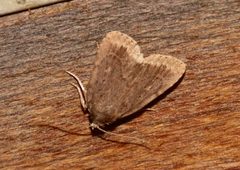
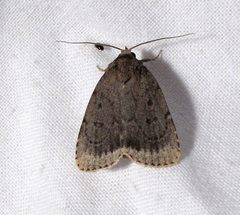
Distinguished from other Amphipyra by the smooth, relatively unmarked forewings lacking prominent transverse lines or strong patterning. The specific epithet "glabella" refers to this smoother appearance compared to . Separation from Amphipyra pyramidoides (copper underwing) and A. tragopoginis (mouse ) requires examination of wing pattern details and, in some cases, genitalia. The smooth amphipyra lacks the distinct pattern elements and color contrasts seen in related species.
Images
Appearance
Wingspan 33–40 mm. Forewings smooth, lacking strong patterning or prominent lines typical of many noctuids. Coloration generally greyish-brown, providing camouflage against bark and other substrates. Hindwings typically paler than forewings. Body relatively smooth and glabrous compared to related , contributing to the specific epithet "glabella" (smooth).
Habitat
Deciduous and mixed forests, woodlands, and wooded suburban areas. often found resting on tree trunks and other vertical surfaces where their cryptic coloration provides effective camouflage.
Distribution
Eastern North America from New York and Quebec west to southern British Columbia, south to Georgia and Colorado. Present in Canadian provinces including Alberta, Manitoba, and Saskatchewan, and in the United States from Vermont southward.
Seasonality
active from August to September depending on location. with one per year.
Life Cycle
Complete with , larval, pupal, and stages. One per year. Larval stage likely occurs in spring and summer, though specific details of larval are poorly documented. Adults emerge in late summer.
Behavior
are and attracted to light. They rest on tree trunks and vertical surfaces during the day, relying on cryptic coloration for concealment. period is relatively brief, concentrated in late summer.
Ecological Role
Larval stage likely functions as a herbivore, though specific plants are not well documented. serve as prey for including bats and birds.
Human Relevance
Minor significance as a subject of entomological study and observation. Not known to be an agricultural or forestry pest. Attracted to artificial light sources, bringing it into occasional contact with humans.
Similar Taxa
- Amphipyra pyramidoidesCopper underwing has more strongly patterned forewings with distinct lines and a coppery-orange hindwing patch not present in A. glabella
- Amphipyra tragopoginisMouse has more contrasting forewing pattern with distinct dark stigmata and paler ground color
- Other NoctuidaeMany noctuids share similar size and general appearance; A. glabella distinguished by smooth, relatively unmarked forewings and late summer period
More Details
Etymology
The specific epithet "glabella" is Latin for "smooth" or "hairless," referring to the relatively smooth, unmarked appearance of the forewings compared to related Amphipyra .
Taxonomic history
Described by Herbert Knowles Morrison in 1874. The Amphipyra has undergone taxonomic revision, with some former now placed in related genera.