
Amphipyra pyramidoides
Guenée, 1852
Copper Underwing, American Copper Underwing
A noctuid found across the United States and southern Canada, with active from July through October. The is , as . Larvae feed on leaves of broadleaf trees and shrubs, and are important prey for birds including eastern bluebirds. Adults are attracted to sites under bark in mid-summer.
Pronunciation
How to pronounce Amphipyra pyramidoides: /ˌæm.fɪˈpaɪ.rə pɪˌræ.mɪˈdɔɪ.diːz/
These audio files are automatically generated. While they are not always 100% accurate, they are a good starting point.
Identification
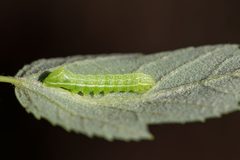
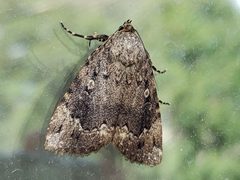
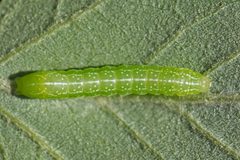
Distinguished from similar Amphipyra by the coppery orange suffusion on the hindwings; the black cross line on the white hindwing is also a key mark. The larval hump on the eighth abdominal segment and the white spiracular line help separate caterpillars from other green noctuid larvae.
Images
Habitat
Associated with deciduous forests and wooded areas where plants grow. Larvae occur on broadleaf trees and shrubs. aggregate under loose bark and in sheltered locations during mid-summer.
Distribution
United States and southern Canada. Documented from Alberta, Manitoba, and Saskatchewan in Canada; Vermont and other US states.
Seasonality
on wing July through October depending on location. One per year. Larvae active in spring. Overwinters as .
Diet
Larvae feed on leaves of broadleaf trees and shrubs: apple (Malus), basswood (Tilia), hawthorn (Crataegus), maple (Acer), oak (Quercus), walnut (Juglans), raspberry (Rubus), grape (Vitis), and greenbrier (Smilax).
Host Associations
- Malus - larval food plantapple
- Tilia - larval food plantbasswood
- Crataegus - larval food planthawthorn
- Acer - larval food plantmaple
- Quercus - larval food plantoak; keystone plant for caterpillar production
- Juglans - larval food plantwalnut
- Rubus - larval food plantraspberry
- Vitis - larval food plantgrape
- Smilax - larval food plantgreenbrier
Life Cycle
. laid in late summer or fall; overwinter as eggs. Larvae emerge and feed in spring. When ready to pupate, larvae construct a shelter by rolling a leaf. occurs within the rolled leaf. eclose in mid-summer and aggregate under bark before dispersing. Adults active July–October.
Behavior
Larvae construct leaf-roll shelters for . Newly eclosed aggregate in groups under loose bark and in similar sheltered locations in mid-summer before becoming active.
Ecological Role
Larvae serve as significant prey for birds; documented as food for eastern bluebird nestlings. As a feeder on diverse broadleaf trees and shrubs, larvae contribute to nutrient cycling and are part of the supporting insectivorous birds. The ' association with oaks (Quercus) links it to keystone plant that disproportionately support caterpillar .
Human Relevance
Minor pest potential on fruit trees (apple, raspberry, grape) and ornamental shrubs, though not considered economically significant. Valued as a subject for science and ecological research on bird-insect . The has been used in studies demonstrating the importance of native plants for supporting caterpillar that feed bird nestlings.
Similar Taxa
- Amphipyra pyramideaSimilar dappled forewing pattern, but A. pyramidoides is distinguished by coppery orange suffusion on hindwings; A. pyramidea has more uniformly colored hindwings without the tone. Geographic ranges overlap but A. pyramidea is more widespread in the Old World.
- Other Amphipyra speciesHindwing coloration and pattern, particularly the suffusion and black cross line, are diagnostic for A. pyramidoides; other lack this combination.
More Details
Research significance
This was documented as prey for eastern bluebird nestlings in a large- science study (Kennedy, Ph.D. dissertation, University of Delaware), which contributed to understanding that caterpillars comprise more than one-third of prey in bird nestling diets. This finding supports the ecological importance of maintaining native plant communities to support caterpillar .