
Tarache aprica
(Hübner, 1808)
Exposed Bird Dropping Moth, Nun
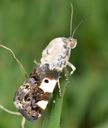
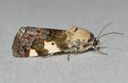
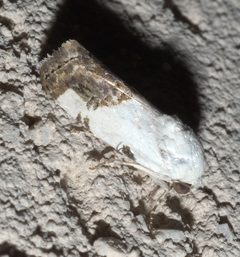
Tarache aprica, commonly known as the exposed bird dropping moth, is a small noctuid native to North America. The exhibits bird-dropping mimicry as a defensive strategy. are active from March through September in southern portions of their range, with a reduced season in northern areas. The larvae feed specifically on Alcea rosea (hollyhock).
Pronunciation
How to pronounce Tarache aprica: /tɑːˈrɑːkeɪ ˈæprɪkə/
These audio files are automatically generated. While they are not always 100% accurate, they are a good starting point.
Identification
Distinguished from similar Tarache by specific wing pattern details and geographic distribution. The bird-dropping appearance is shared with related species, requiring examination of wing markings and genitalia for precise identification. The "exposed bird dropping moth" contrasts with the "hidden bird dropping moth" (Tarache tetragona), which rests with wings folded and concealed.
Images
Habitat
Gardens, fields, and open areas.
Distribution
North America: Ontario and Quebec south to Florida, west to Arizona, north to Kansas and Iowa. Records from Great Britain are considered import-related and not established .
Seasonality
active March to September in the south; reduced season in the north.
Diet
Larvae feed on Alcea rosea (hollyhock). feeding habits not documented.
Host Associations
- Alcea rosea - larval Hollyhock
Life Cycle
Complete with , larva, pupa, and stages. Specific developmental details not documented.
Behavior
; attracted to light. rest with wings spread flat, exposing the bird-dropping mimicry pattern—hence the "exposed" bird dropping moth.
Ecological Role
Larval herbivore on hollyhock. Role in broader not documented.
Human Relevance
Occasional pest of ornamental hollyhocks.
Similar Taxa
- Tarache tetragonaAlso exhibits bird-dropping mimicry, but rests with wings folded concealing the pattern (hence "hidden" bird dropping moth)
- Tarache delectaRelated in same with similar larval and plant preferences