
Acontiini
Guenée, 1841
Genus Guides
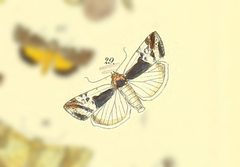
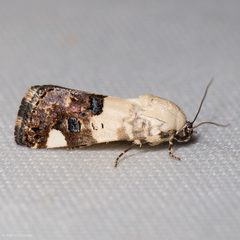
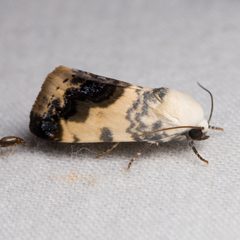
5Acontiini is a tribe of within the Acontiinae ( Noctuidae). Members are generally small to medium-sized noctuoid moths. The tribe has been the subject of taxonomic revision, with some historically placed here later reassigned to related tribes. Acontiini includes with diverse morphologies but generally shares characteristics of reduced or simplified wing venation patterns compared to other noctuine groups.
Pronunciation
How to pronounce Acontiini: /ˌæ.kənˈtiː.aɪ.naɪ/
These audio files are automatically generated. While they are not always 100% accurate, they are a good starting point.
Identification
Identification to tribe level requires examination of genitalia and wing venation patterns. Acontiini generally exhibit reduced forewing venation with the absence or fusion of certain , particularly in the discal and subcostal areas. Male genitalia often show distinctive valve structures and that separate them from related tribes in Acontiinae. External morphology alone is usually insufficient for definitive tribal assignment.
Images
Distribution
The tribe has a broad distribution, with representatives recorded from North America, Central and South America, Africa, Asia, and Australia. Specific distribution patterns vary considerably among constituent .
Similar Taxa
- AediiniHistorically confused with Acontiini due to similar external appearance and shared placement; distinguished by differences in male genitalia structure and forewing venation patterns.
- Calpinae (as tribe Calpini)Some formerly placed in Acontiini have been transferred to Calpini based on larval and genitalia; adults can appear similar but differ in structure and wing scaling.
More Details
Taxonomic instability
The circumscription of Acontiini has changed substantially with molecular phylogenetic studies. Several previously included here have been moved to other tribes within Acontiinae or to different entirely. Current composition remains under revision.
Larval biology
Larval plants and feeding habits are poorly documented for most Acontiini . Available records suggest some larvae feed on flowers, fruits, or seeds, but comprehensive data are lacking for the majority of .