
Calpini
fruit-piercing moths, vampire moths
Genus Guides
3- Calyptra(Vampire Moths)
- Gonodonta
- Plusiodonta
Calpini is a tribe of fruit-piercing moths in the Erebidae, formerly placed in Noctuidae. possess a pointed, barbed adapted for piercing fruit skin to feed on juice. The Calyptra within this tribe includes known as vampire moths, which can pierce mammal skin to drink blood. This blood-feeding is facultative and restricted to males; females feed exclusively on fruit juice and nectar.
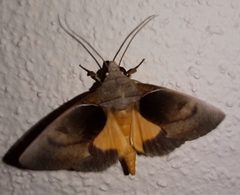
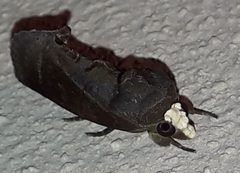
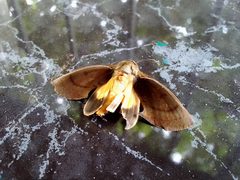
Pronunciation
How to pronounce Calpini: /kælˈpaɪnaɪ/
These audio files are automatically generated. While they are not always 100% accurate, they are a good starting point.
Identification
Members of Calpini are distinguished from related by a modified that is sharply pointed and armed with barbs or hooks along its sides. This structure enables mechanical piercing of tough substrates. The proboscis operates through an alternating anchoring and drilling mechanism using two parts in antiparallel movement. External morphological features otherwise vary by ; no single wing pattern or body form characterizes the entire tribe.
Images
Distribution
The tribe has a broad Old World distribution, with recorded from southeast Asia, eastern Africa, China, Japan, India, and eastern and southern Europe. The Calyptra includes one Nearctic species, Calyptra canadensis, found in the United States and Canada.
Diet
feed by piercing fruit to extract juice; this is an obligate for both sexes. In the Calyptra, males facultatively pierce mammal skin to drink blood. Females do not blood-feed. Larvae feed on leaves.
Host Associations
- fruit - food source pierce fruit skin to feed on juice; obligate for all
- mammals - facultative blood Only male Calyptra ; includes humans, buffalo, tapirs, elephants
Life Cycle
Larvae feed on leaves. emerge with a fully developed piercing . exists in feeding : females are obligate fruit piercers, while males of some Calyptra additionally blood-feed.
Behavior
Blood-feeding in Calyptra males involves landing on skin, applying the , and rocking it back and forth to penetrate. Once inserted, the oscillates its to drive the proboscis deeper, then deploys lateral hooks to anchor firmly. Feeding bouts may last up to 50 minutes. The is believed to have evolved from fruit-piercing.
Human Relevance
Blood-feeding can bite humans, causing red, sore marks, but are not considered dangerous. Calyptra canadensis has been documented piercing strawberries in laboratory settings. The tribe is studied for evolutionary insights into dietary shifts from plant to animal feeding.
Similar Taxa
- other Erebidae mothsLack the pointed, barbed ; feed on nectar through siphoning rather than piercing
- Noctuidae (former placement)Calpini were historically classified here but differ in and feeding mechanism
More Details
Evolutionary origin of blood-feeding
Blood-feeding in Calyptra is hypothesized to have evolved from fruit-piercing , not from pre-existing animal-associated feeding. All Calyptra retain obligate fruit-piercing as the ancestral state. Males may blood-feed to obtain salts subsequently transferred to females via sperm, potentially benefiting offspring, though this remains unproven.