
Tarache
Hübner, 1823
Species Guides
30- Tarache abdominalis
- Tarache apela(bird dropping moth)
- Tarache aprica(Exposed Bird Dropping Moth)
- Tarache areli
- Tarache areloides
- Tarache arida
- Tarache augustipennis(Narrow-winged Midget Moth)
- Tarache axendra
- Tarache bella
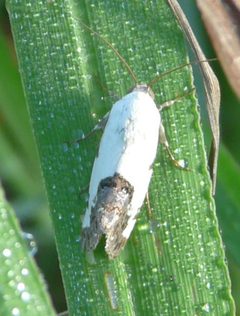
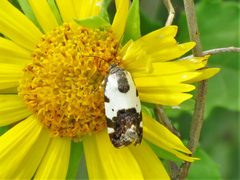
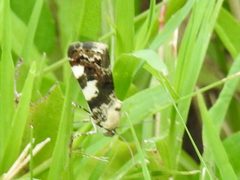
Tarache is a of in the Noctuidae, Acontiinae, erected by Jacob Hübner in 1823. The genus comprises primarily New World , most of which were formerly classified under the genus Acontia. Taxonomic authorities differ on its status: Catalogue of Life treats Tarache as accepted, while GBIF and some lepidopteran resources list it as a synonym of Acontia. The genus includes approximately 50 described species arranged in three main species groups (aprica, bilimeki, and lucasi groups).
Pronunciation
How to pronounce Tarache: //təˈrɑː.ke//
These audio files are automatically generated. While they are not always 100% accurate, they are a good starting point.
Identification
Tarache are distinguished from other Acontiinae by the combination of porrect palps and the corneous projection. Species-level identification relies on genitalia examination and wing pattern analysis. The is most readily confused with Acontia sensu stricto, from which it was separated primarily on geographic grounds (New World versus Old World distribution).
Images
Appearance
are small to medium-sized noctuid . The is characterized by porrect (forward-projecting) labial palps and a with a rounded corneous projection. Larvae possess four pairs of abdominal . Individual exhibit considerable variation in wing pattern and coloration, with many displaying cryptic or bird-dropping mimicry coloration typical of acontiine moths.
Habitat
vary by but generally include open areas, grasslands, scrublands, and woodland edges where plants occur. Many species are associated with disturbed or early successional habitats.
Distribution
Primarily New World distribution, with occurring throughout North America (including the United States and Canada), Central America, and South America. Some records exist from Europe (Denmark, Norway, Sweden) though these may represent vagrants or misidentifications.
Seasonality
periods vary by and latitude, generally occurring from spring through fall in temperate regions. Many species are multivoltine in southern portions of their range.
Diet
Larvae feed on a variety of plants. Tarache delecta larvae feed on Hibiscus (Malvaceae), including Hibiscus lasiocarpus. Other species likely have specific host plant associations, though these remain incompletely documented for most Tarache species.
Host Associations
- Hibiscus lasiocarpus (hairy rose mallow) - larval Tarache delecta
- Hibiscus species - larval General for T. delecta
Life Cycle
Complete with , larva, pupa, and stages. Larvae are external feeders on plant foliage. Late instar larvae of T. delecta are 34–36 mm in length, dark purple with black spots edged with orange. presumably occurs in soil or leaf litter, though specific details are poorly documented for most .
Behavior
are and attracted to light. Larvae feed on leaf surfaces, typically near margins, creating large holes in leaves. Some larvae may feed on bracts surrounding flower buds.
Ecological Role
Larvae function as primary consumers of plant foliage. Tarache notabilis serves as host for the tachinid Actia monticola. The contributes to noctuid diversity in open and semi-open .
Human Relevance
Tarache delecta has been considered a pest of ornamental mallows, with larvae capable of significant defoliation. Historical control recommendations included arsenate of lead spraying, though modern approaches would be preferred.
Similar Taxa
- AcontiaFormerly included most Tarache ; distinguished primarily by geographic distribution (Old World versus New World) and subtle genitalic differences
- OzanaAnother acontiine with similar wing patterns; requires genitalia examination for separation
- MaliatthaSimilar small noctuids with cryptic coloration; differs in palp structure and wing venation
More Details
Taxonomic Controversy
The status of Tarache remains contentious. Lepidoptera and Some Other Life Forms and The Global Lepidoptera Names Index report Tarache as a synonym of Acontia, while Catalogue of Life maintains it as a valid . This reflects broader ongoing revisions of the Acontiinae, where molecular and morphological data are being integrated to resolve generic boundaries.
Species Groups
are informally arranged into three groups: the aprica group (including T. aprica, T. abdominalis, T. ardoris, and ~20 others), the bilimeki group (including T. bilimeki, T. bella, T. cora, and ~25 others), and the lucasi group (T. lucasi and T. vittamargo). These groupings reflect morphological similarities and likely phylogenetic relationships, though formal phylogenetic analysis is lacking.
Research Gaps
Biological information is sparse for most . plant records exist for only a few species, and details (, voltinism, stage) remain undocumented for the majority of the .
Sources and further reading
- BugGuide
- Wikipedia
- GBIF taxonomy match
- iNaturalist taxon
- NCBI Taxonomy
- Catalogue of Life
- Bug Eric: New Mexico Night Bugs
- moths | Beetles In The Bush | Page 3
- Lepidoptera | Beetles In The Bush | Page 5
- Biology of Actia monticola Mall (Diptera: Tachinidae), an internal larval parasitoid of Tarache notabilis (Walker) (Noctuidae: Lepidoptera)