
Tarache areloides
Barnes & McDunnough, 1912
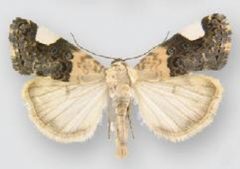
A small noctuid of the Acontiinae, first described from the southwestern United States in 1912. have forewings 12–14 mm in length and are active from July through September. The exhibits a distinctive bird-dropping mimicry coloration, a common defensive among acontiine moths.
Pronunciation
How to pronounce Tarache areloides: /təˈræʃi əˈriːloɪˌdiːz/
These audio files are automatically generated. While they are not always 100% accurate, they are a good starting point.
Identification
Recognizable by its bird-dropping mimicry pattern—pale grayish-white forewings with darker mottling and a somewhat rounded, irregularly marked appearance. The can be distinguished from similar Tarache species by the specific configuration of dark and light areas on the forewing, though precise identification may require examination of genitalia. Forewing length 12–14 mm in both sexes.
Images
Habitat
Arid and semi-arid environments of the southwestern United States, likely associated with desert scrub and grassland vegetation .
Distribution
Restricted to the southwestern United States: Arizona and New Mexico.
Seasonality
on wing from July to September, with exact timing varying by location and elevation.
Behavior
are attracted to ultraviolet light sources at night. The bird-dropping mimicry coloration suggests a defensive strategy of against visually hunting .
Similar Taxa
- Tarache delectaSimilar size, , and bird-dropping mimicry pattern; distinguished by plant associations (T. delecta larvae feed on Hibiscus) and subtle differences in wing pattern.
- Plagiomimicus dimidiataSimilar bird-dropping mimicry appearance and habits; distinguished by wing shape and pattern details, with early life stages unknown.
- Other AcontiinaeMany acontiine share the bird-dropping mimicry ; precise identification requires attention to specific pattern elements and often genitalia examination.