
Spragueia
Grote, 1875
Species Guides
12- Spragueia apicalis(Yellow Spragueia Moth)
- Spragueia cleta(Common Spragueia Moth)
- Spragueia dama(Southern Spragueia Moth)
- Spragueia funeralis(Somber Spragueia)
- Spragueia guttata(spotted spragueia)
- Spragueia jaguaralis(Jaguar Moth)
- Spragueia leo(Common Spragueia Moth)
- Spragueia magnifica(magnificent bird dropping moth)
- Spragueia margana(bird dropping moth)
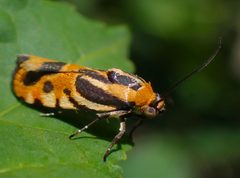
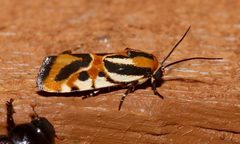
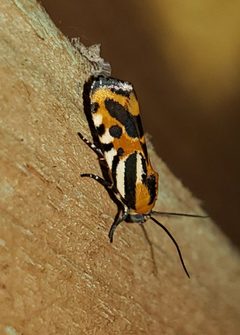
Spragueia is a of in the Noctuidae, established by Augustus Radcliffe Grote in 1875. The genus comprises approximately 20 described distributed primarily in the Americas. Taxonomic placement remains provisional; some authors subsume Spragueia within Acontia, though it is currently treated as distinct pending further phylogenetic study. The genus includes the Common Spragueia Moth (Spragueia leo), a frequently encountered species in eastern North America.
Pronunciation
How to pronounce Spragueia: /spræˈɡeɪ.iə/
These audio files are automatically generated. While they are not always 100% accurate, they are a good starting point.
Identification
Spragueia are small noctuid , generally with wingspans under 25 mm. Many species exhibit characteristic forewing patterns including pale or whitish ground color with dark marginal markings, spots, or bands. The is distinguished from related Acontia by subtle genitalic differences and forewing venation, though these characters require microscopic examination. Species-level identification relies on forewing pattern elements: presence and position of discal spots, subterminal line configuration, and degree of dark shading at the wing apex and base.
Images
Habitat
occur in diverse terrestrial including deciduous woodlands, forest edges, meadows, and suburban areas. The Common Spragueia Moth has been observed in mixed hardwood forests and open grassy areas.
Distribution
New World distribution, with recorded from North America (United States, Canada, Mexico), Central America, and South America. The shows highest diversity in tropical and subtropical regions, with several species extending into temperate eastern North America.
Seasonality
activity varies by and latitude. In temperate North America, periods generally span late spring through summer (May–August), with some species producing multiple . The Common Spragueia Moth is active from June through August in Ohio.
Behavior
are and attracted to artificial light sources. The Common Spragueia Moth has been documented at blacklight stations.
Human Relevance
The Common Spragueia Moth is encountered frequently enough to serve as a recognizable entry point for amateur naturalists participating in -watching events. The contributes to documented moth diversity at citizen science gatherings such as National Moth Week and regional mothapaloozas.
Similar Taxa
- AcontiaOverlapping distribution and similar small size; Spragueia has been historically treated as a synonym or subgenus of Acontia. Separation requires examination of male genitalia and forewing venation.
- TaracheSimilar small, pale noctuids with spotted forewings; distinguished by structural differences in genitalia and wing scaling.
More Details
Taxonomic uncertainty
The relationship between Spragueia and Acontia remains unresolved. iNaturalist and some recent treatments maintain Spragueia as distinct, while other classifications merge the two .