
Spragueia magnifica
Grote, 1883
magnificent bird dropping moth
Spragueia magnifica is a of in the Noctuidae, first described by Augustus Radcliffe Grote in 1883. It is one of approximately 20 species in the Spragueia, a group commonly known as bird dropping moths due to their resemblance to avian . The species occurs in North America and is assigned Hodges number 9121 in the North American Moth Photographers Group numbering system. Like other members of its genus, it is presumed to be and attracted to light sources.
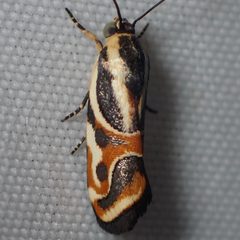
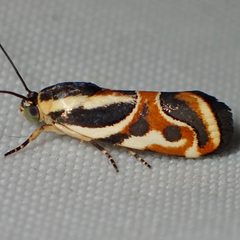
Pronunciation
How to pronounce Spragueia magnifica: //sprəˈɡeɪ.iə mæɡˈnɪfɪkə//
These audio files are automatically generated. While they are not always 100% accurate, they are a good starting point.
Identification
Members of the Spragueia can be distinguished from similar noctuid by their characteristic bird-dropping mimicry patterning. Within the genus, S. magnifica may be separated from by specific wing pattern elements, though precise diagnostic features require examination of specimens. The MONA/Hodges number 9121 provides a unique identifier for this in North American faunal works.
Images
Distribution
North America. Specific range details within this region are not well documented in available sources.
Human Relevance
The has been documented through citizen science platforms such as iNaturalist, with 294 observations recorded as of the knowledge cutoff. It is occasionally encountered during -lighting events and insect surveys.
Similar Taxa
- Spragueia leoAnother member of the same with similar bird-dropping mimicry appearance; separation requires detailed examination of wing pattern and genitalia
- Other Spragueia speciesApproximately 20 share the -defining bird-dropping camouflage strategy; -level identification relies on subtle pattern differences and dissection in most cases
Sources and further reading
- BugGuide
- Wikipedia
- GBIF taxonomy match
- iNaturalist taxon
- Catalogue of Life
- Bug Eric: Moth Week and "Mothapalooza"
- My Canon 8X Macro Lens | Beetles In The Bush
- Life at 8X—soybean aphid | Beetles In The Bush
- techniques | Beetles In The Bush | Page 10
- Use of extension tubes for better lighting | Beetles In The Bush
- ID Challenge #9 | Beetles In The Bush