
Spragueia leo
(Guenée, 1852)
Common Spragueia Moth
Spragueia leo, known as the Common Spragueia , is a small noctuid moth with a wingspan of 12–18 mm. It occurs across eastern and central North America, from Ontario and Massachusetts south to Florida and west to Texas and Kansas. are active from June through September, and larvae feed on Convolvulus .
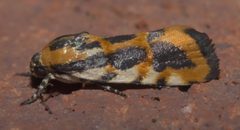
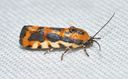
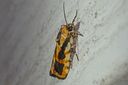
Pronunciation
How to pronounce Spragueia leo: //spɹaˈɡuːiə ˈlioʊ//
These audio files are automatically generated. While they are not always 100% accurate, they are a good starting point.
Identification
Distinguished from similar Spragueia by geographic range and association with Convolvulus plants. Accurate identification requires examination of genitalia or reference to regional guides.
Images
Appearance
Small with wingspan of 12–18 mm. Specific coloration and pattern details not documented in available sources.
Habitat
Associated with open where Convolvulus grow. Specific habitat preferences beyond plant requirements are not documented.
Distribution
Eastern and central North America: from Ontario, Manitoba, and southeastern Massachusetts south to Florida, west to Texas and Kansas.
Seasonality
active from June to September. Larval not documented.
Diet
Larvae feed on Convolvulus (bindweeds and morning glories). feeding habits not documented.
Host Associations
- Convolvulus - larval plant
Life Cycle
Complete with , larva, pupa, and stages. Larvae feed on Convolvulus before pupating. stage not documented.
Behavior
are and attracted to light. Specific behavioral details beyond period are not documented.
Ecological Role
Herbivore as larvae, feeding on Convolvulus. Role in and function not documented.
Human Relevance
No documented economic or medical significance. Occasionally encountered by enthusiasts at light traps.
Similar Taxa
- Other Spragueia speciesSimilar size and general appearance; require genital dissection or molecular analysis for definitive identification
More Details
Taxonomic Note
Some sources list Spragueia leo as a synonym of Acontia leo, reflecting historical taxonomic instability within the Acontiinae. Current consensus places the in Spragueia.
Sources and further reading
- BugGuide
- Wikipedia
- GBIF taxonomy match
- iNaturalist taxon
- NCBI Taxonomy
- Catalogue of Life
- UC Davis Seminar Speaker to Share Honey Bee Research | Bug Squad
- Bug Eric: Moth Week and "Mothapalooza"
- India’s relic forests reveal a new species of leopard gecko
- Dashing caterpillars predicting weather- Woolly bears, Pyrrharctia isabella, saltmarsh caterpillar, Estigmene acrea, and leopard moths, Hypercompe scribonia — Bug of the Week
- New Species of Recluse Spider Named for Leonard Cohen
- Donna Leonard: At the Helm of a World-Renowned Forest Insect Management Program