
Orgyia detrita
Guérin-Méneville, 1831
Fir Tussock Moth, Live Oak Tussock Moth
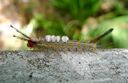
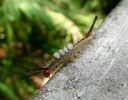
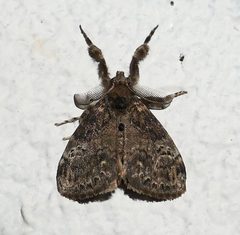
Orgyia detrita is a tussock in the Erebidae, first described by Félix Édouard Guérin-Méneville in 1831. The is found in North America and is known by two reflecting its association with different plants: fir tussock moth and live oak tussock moth. The larvae possess that can cause dermatitis in humans. The species has been assigned MONA/Hodges number 8313.
Pronunciation
How to pronounce Orgyia detrita: /ˈɔr.dʒi.ə dɪˈtraɪ.tə/
These audio files are automatically generated. While they are not always 100% accurate, they are a good starting point.
Identification
Females are wingless, a characteristic feature of the Orgyia. Males are winged and fly to locate females. The can be distinguished from other Orgyia species by geographic range and plant associations, though specific diagnostic features require examination of morphological details not provided in available sources.
Images
Habitat
Associated with coniferous forests (fir) and oak woodlands (live oak), reflecting the dual of the . The specific requirements vary with plant availability.
Distribution
North America. Specific range details within this region are not documented in available sources.
Life Cycle
Includes larval, pupal, and stages. Females are wingless and remain near their cocoons, emitting to attract flying males. Cocoons are incorporated into the structure. Specific timing of developmental stages is not documented in available sources.
Behavior
Females are sedentary and call males from their cocoons using . Males are active fliers that locate females for mating.
Human Relevance
Larvae possess that can cause dermatitis in humans upon contact. The is referenced in entomological literature with MONA/Hodges number 8313, indicating its inclusion in standardized North American classification systems.
Similar Taxa
- Orgyia pseudotsugataDouglas-fir tussock moth, a related North American in the same with similar and wingless females.
- Orgyia vetustaWestern tussock moth, another congeneric with similar and features.
- Orgyia antiquaVapourer , a Palearctic congeneric sharing the characteristic of wingless females.
More Details
Taxonomic History
First described by Félix Édouard Guérin-Méneville in 1831. The has been assigned MONA ( of North America)/Hodges number 8313, a standardized identification number used in North American lepidopteran catalogs.
Medical Significance
The of larvae are documented as causing dermatitis in humans, representing a direct human health impact from this .
Sources and further reading
- BugGuide
- Wikipedia
- GBIF taxonomy match
- iNaturalist taxon
- NCBI Taxonomy
- Catalogue of Life
- Terry McGlynn: 'Lessons about Thermal Ecology from Rainforest Ants' | Bug Squad
- Bug Eric: National Moth Week Recap, 2015
- Plant hunting in South Essex - Buglife Blog - Buglife
- Bug Eric: Wasp Wednesday: Pimpla sanguinipes
- Fir Tussock Moth Orgyia detrita Guérin-Méneville, 1831 (Lepidoptera: Erebidae: Lymantriinae)