
Dasychira pinicola
Dyar, 1911
pine tussock moth, pine tussock
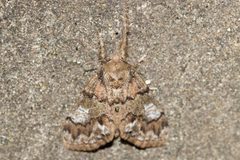
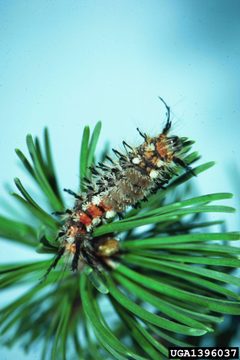
Dasychira pinicola, the pine tussock , is a North American in the tussock moth Lymantriinae. First described by Harrison Gray Dyar Jr. in 1911, it is associated with pine forests in the eastern and upper midwestern United States. The species is recognized as a defoliator of Pinus species, with larvae feeding on jack pine (Pinus banksiana) and potentially other conifers.
Pronunciation
How to pronounce Dasychira pinicola: /ˌdæsɪˈkaɪrə pɪˈnɪkəla/
These audio files are automatically generated. While they are not always 100% accurate, they are a good starting point.
Identification
As a member of the Dasychira, likely display the characteristic tussock features including reduced mouthparts and often muted coloration. Specific diagnostic features distinguishing D. pinicola from such as D. basiflora (yellow-based tussock moth) and D. vagans (variable tussock moth) are not documented in available sources. Larvae would be expected to show the hair tufts or tussocks typical of Lymantriinae, but detailed larval for this is not described in accessible literature.
Images
Habitat
Pine-dominated forests and plantations. Associated with Pinus , particularly in regions where jack pine occurs.
Distribution
Eastern and upper midwestern United States. Documented from New Jersey, Massachusetts, Wisconsin, Minnesota, and Vermont. Distribution aligns with the range of its primary , Pinus banksiana.
Diet
Larvae feed on Pinus , specifically documented on Pinus banksiana (jack pine).
Host Associations
- Pinus banksiana - larval food plantPrimary documented
Ecological Role
Herbivore and defoliator of pine . Potential pest in Christmas tree plantations and managed pine stands, though specific economic impact data is not documented.
Human Relevance
Potential pest of conifer , including Christmas tree production. The is noted in pest management contexts for Fraser fir production, though its primary association is with Pinus species rather than Abies fraseri.
Similar Taxa
- Dasychira basifloraOverlapping range and ; yellow-based tussock moth distinguished by wing pattern features not applicable to D. pinicola identification without specimen examination
- Dasychira vagansVariable tussock with broader range and distribution; specific separation from D. pinicola requires detailed morphological comparison
- Lymantria disparGypsy moth is a more destructive conifer defoliator with established management programs; and larvae differ in size and pattern
More Details
Taxonomic note
The epithet 'pinicola' (pine-dweller) reflects its documented association with Pinus species. This distinguishes it from many Dasychira species associated with deciduous .
Data limitations
Despite being described over a century ago, detailed , larval , and data for D. pinicola remain sparse in accessible literature. Most observations are specimens with limited ecological documentation.