
Hypena edictalis
Walker, 1859
Large Bomolocha, Large Snout
Hypena edictalis, commonly known as the Large Bomolocha or Large Snout, is a in the Erebidae. First described by Francis Walker in 1859, this occurs across eastern and central North America. are active from June to August, with one in northern and partial second generations in more southerly regions. The species is notable for its moderate size and distinctive wing patterning.
Pronunciation
How to pronounce Hypena edictalis: /haɪˈpiːnə ɛˌdɪkˈteɪlɪs/
These audio files are automatically generated. While they are not always 100% accurate, they are a good starting point.
Identification
Distinguished from other Hypena by its larger size (wingspan 33–37 mm versus smaller ) and specific wing pattern details. Similar to other 'bomolocha' in general form but separable by geographic range and wing pattern elements. The 'Large Bomolocha' reflects its status as one of the larger species in this species group. Identification to species level typically requires examination of wing pattern details and genitalia for confirmation.
Images
Appearance
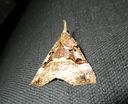
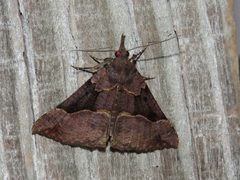
Medium-sized with wingspan of 33–37 mm. Forewings are typically brownish-gray with complex patterning including darker lines and shading. Hindwings are paler, usually grayish or whitish. Body is relatively stout. When at rest, wings are held in a tent-like or slightly flattened posture typical of the Hypena. The labial palps are elongated and project forward, giving a 'snouted' appearance characteristic of the genus.
Habitat
Found in a variety of wooded and semi-open across its range. Occurs in deciduous and mixed forests, forest edges, and areas with plant availability. Specific microhabitat preferences for larvae are tied to presence of Laportea .
Distribution
North America: Quebec and Maine south to Virginia and Kentucky, westward to the foothills of Alberta and the Peace River area of British Columbia. Present in Canadian provinces of Alberta, Manitoba, and Saskatchewan, and U.S. state of Vermont.
Seasonality
fly from June to August, with timing varying by location. One per year in northern parts of range; partial second generation occurs from Ohio south through the Appalachian Mountains.
Diet
Larvae feed on Laportea (plants in the nettle , Urticaceae). feeding habits not documented.
Host Associations
- Laportea - larval food plantSpecific Laportea not identified in available sources
Life Cycle
Complete with , larval, pupal, and stages. Larvae are the feeding and growing stage, developing on Laportea plants. presumably occurs in soil or leaf litter, though specific details not documented. Adults emerge in summer months. One annually in northern range; partial second generation in southern Appalachians and Ohio region.
Behavior
are and attracted to light. Specific behavioral details beyond period and light attraction are not documented in available sources.
Ecological Role
Larvae function as herbivores on Laportea plants. likely serve as prey for including bats and birds. Specific ecological interactions not well documented.
Human Relevance
Not known to be of economic importance. Occasionally encountered by enthusiasts at light traps. No documented pest status.
Similar Taxa
- Hypena scabraGreen Cloverworm moth; smaller with different wing pattern and more southerly distribution, also has different larval plants including clover and soybean
- Other Hypena speciesNumerous exist in North America; H. edictalis distinguished by larger size and specific wing pattern elements
More Details
Taxonomic note
Formerly placed in Noctuidae; now classified in Erebidae based on molecular and morphological studies. The 'bomolocha' refers to an older generic name once applied to this group of .
Generation timing
The partial second in southern represents an unusual pattern for a northern-ranging , suggesting to longer growing seasons in more southerly latitudes.
Sources and further reading
- BugGuide
- Wikipedia
- GBIF taxonomy match
- iNaturalist taxon
- NCBI Taxonomy
- Catalogue of Life
- Soybean Insects: Mid-to-Late Season Pests (V8 to Maturity) - AgriLife Extension Entomology
- green cloverworm (Hypena scabra) - Entomology Today
- A Revision of Soybean Caterpillar Pest Information for U.S. Soybean
- Bug Eric: National Moth Week 2024 Recap from Kansas City
- Bug Eric: Blacklighting Already?
- caterpillar pests of soybean - Entomology Today