
Hypeninae
Herrich-Schäffer, 1851
Hypenine Snout Moths
Genus Guides
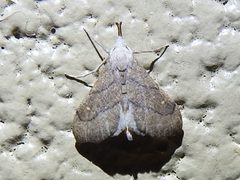
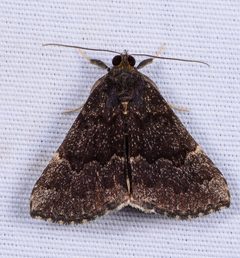
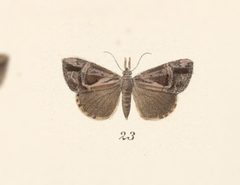
3Hypeninae is a of within the Erebidae, first described by Herrich-Schäffer in 1851. Members are commonly known as snout moths due to their elongated labial palps that project forward like a snout. The subfamily was previously classified within Noctuidae but has been reclassified to Erebidae following taxonomic revisions. A notable , Mecistoptera griseifusa, has been documented feeding exclusively on tears using its .
Pronunciation
How to pronounce Hypeninae: //haɪˈpɛnɪniː//
These audio files are automatically generated. While they are not always 100% accurate, they are a good starting point.
Identification
Hypeninae are distinguished from similar Erebidae by their prominent elongated labial palps that form a distinct snout-like projection. The group has undergone significant taxonomic revision, with several former reassigned to Rivulinae and Boletobiinae; remaining genera cluster around the type genus Hypena.
Images
Behavior
Mecistoptera griseifusa has been observed exhibiting lachryphagy, drinking tears with its as its sole food source.
Similar Taxa
- RivulinaeFormerly contained now moved to this ; distinguished by different morphological characteristics and wing patterns
- BoletobiinaeFormerly contained now moved to this ; distinguished by different morphological characteristics
- HerminiinaeBoth are Erebidae with somewhat similar body forms, but Herminiinae (litter moths) lack the pronounced snout projection and have different wing venation
More Details
Taxonomic History
The was originally described in 1851 by Gottlieb August Wilhelm Herrich-Schäffer. It was long classified within Noctuidae but was transferred to Erebidae as part of broader reorganization of the Noctuoidea superfamily. Several previously placed in Hypeninae have been reassigned to Rivulinae and Boletobiinae, narrowing the subfamily's scope to genera most closely related to Hypena.