
Zale strigimacula
Little Lined Zale
Zale strigimacula, commonly known as the Little Lined Zale, is a of in the Erebidae. It belongs to the Zale, a group of owlet moths whose caterpillars feed on various woody plants. The species is part of the diverse North American noctuid fauna and is known to be a for including Ammophila nigricans. The genus Zale is taxonomically complex with many similar species, making field identification challenging.
Pronunciation
How to pronounce Zale strigimacula: /zeɪl ˌspɛsɪˈnɪər strɪˌdʒɪmækjʊlə/
These audio files are automatically generated. While they are not always 100% accurate, they are a good starting point.
Identification
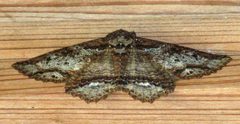
The Zale contains numerous similar that are difficult to distinguish without close examination. Species in this genus typically have cryptic coloration in shades of brown, gray, or black, often with fine lines or patterns on the forewings. The specific epithet "strigimacula" refers to streaked or lined markings. Accurate identification usually requires examination of genitalia or reference to regional faunal works. The species may be confused with other Zale species such as Zale horrida or Zale galbanata, which share similar size and wing patterns.
Images
Distribution
The occurs in North America, with records from the eastern and central United States. The Zale is broadly distributed across North America with highest diversity in the eastern deciduous forest biome.
Seasonality
are active during the warmer months, with periods typical of temperate noctuid . Most Zale have one or two per year, with adults flying from late spring through early autumn depending on latitude.
Diet
Larvae feed on woody plants, particularly in the Pinaceae including pines. The caterpillars are feeders on needles.
Host Associations
- Pinus - larval foodplantpine needles
Life Cycle
Complete with , larva, pupa, and stages. Larvae are solitary feeders. occurs in soil or leaf litter.
Behavior
are and attracted to light. Larvae feed at night and rest during daylight hours concealed in foliage or on bark.
Ecological Role
Larval stage functions as a primary consumer of conifer foliage. The serves as prey for including Ammophila nigricans, which provisions its nests with Zale caterpillars. This parasitoid relationship contributes to and nutrient cycling in forest .
Human Relevance
The has minor significance as an occasional defoliator of pine trees, though are rare. It is of interest to lepidopterists and naturalists studying diversity. The species has been documented in ecological studies of - relationships.
Similar Taxa
- Zale horridaSimilar size, coloration, and wing pattern; distinguished by subtle differences in forewing markings and genitalia
- Zale galbanataOverlapping distribution and similar cryptic brown coloration; requires examination of structural characters for separation
- Zale minereaShares habits and general appearance; differs in specific wing pattern elements
More Details
Parasitoid relationships
Zale strigimacula has been documented as a for the digger wasp Ammophila nigricans, a that hunts large caterpillars to provision its underground nests. This interaction was recorded in field observations in Massachusetts and Kansas.
Taxonomic note
The designation "sp-nr-strigimacula" indicates a specimen near but not definitively identified as Zale strigimacula, reflecting the taxonomic difficulty of this . Many Zale require dissection and comparison with reference specimens for confident identification.