
Catocala parta
Guenée, 1852
Mother Underwing Moth, Mother Underwing
Pronunciation
How to pronounce Catocala parta: /ˈkætəkələ ˈpɑrtə/
These audio files are automatically generated. While they are not always 100% accurate, they are a good starting point.
Identification
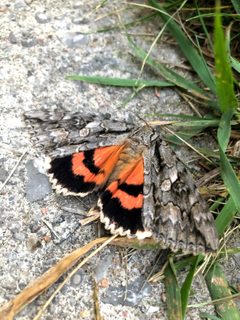
Distinguished from other Catocala by specific forewing pattern and hindwing coloration. The combination of size (70–78 mm wingspan), geographic range, and August–September period aids identification. Forewing pattern details and hindwing coloration require comparison with similar underwing species. Examination of genitalia may be necessary for definitive identification.
Images
Habitat
Associated with riparian and woodland where plants Populus and Salix occur. Found in mixed forests, forest edges, and areas with cottonwood, willow, and aspen.
Distribution
North America: Nova Scotia south to Maryland and Kentucky, west to southern Saskatchewan and Alberta, western Montana, and Utah.
Seasonality
active August to September, with timing varying by location.
Diet
Larvae feed on Populus and Salix (poplars, willows, and related trees). diet not documented.
Host Associations
- Populus - larval food plantLarvae feed on poplar
- Salix - larval food plantLarvae feed on willow
Life Cycle
Complete with , larva, pupa, and stages. Larval stage feeds on plants. Adults emerge in late summer. Specific details of site and stage not documented.
Behavior
are . Like other underwing moths, typically rests with forewings folded over the back, concealing the brightly colored hindwings. When disturbed, may flash hindwings to startle before .
Ecological Role
Larval herbivore on woody plants. may serve as prey for and as potential . Specific ecological interactions not well documented.
Human Relevance
Subject of interest to lepidopterists and enthusiasts. Participates in National Moth Week events as part of the spotlighted Catocala. No documented economic importance.
Similar Taxa
- Catocala aholibahSimilar size and ; distinguished by specific forewing and hindwing patterns
- Catocala verillianaOverlapping range and period; smaller size and different wing patterns
- Catocala amestrisSimilar underwing ; distinguished by geographic distribution and wing pattern details
- Catocala epioneOverlapping western range; distinguished by specific hindwing coloration and pattern
Sources and further reading
- BugGuide
- Wikipedia
- GBIF taxonomy match
- iNaturalist taxon
- NCBI Taxonomy
- Catalogue of Life
- A Gathering of Lepidopterists: Who's Who of the Butterfly, Moth Experts | Bug Squad
- Got Moths? Celebrate National Moth Week and Global Citizen Science
- Bug Eric: National Moth Week Recap, 2015
- Bug Eric: National Moth Week Recap for Colorado Springs
- Bug Eric: National Moth Week 2024 Recap from Kansas City
- Bug Eric: New Mexico Night Bugs