
Catocala muliercula
Guenée, 1852
Little Wife Underwing
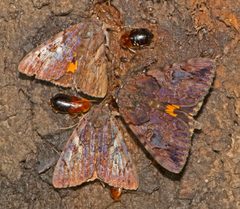
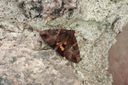
Catocala muliercula, known as the Little Wife Underwing, is a in the Erebidae. It is one of more than 250 in the Catocala, commonly called underwing moths due to their habit of concealing brightly colored hindwings beneath cryptic forewings when at rest. This species occurs across eastern and central North America, from Massachusetts to Florida and west to Texas and New Mexico. Like other underwings, it is primarily and attracted to lights.
Pronunciation
How to pronounce Catocala muliercula: /ˌkætəˈkeɪlə ˌmʌliˈɜrkjʊlə/
These audio files are automatically generated. While they are not always 100% accurate, they are a good starting point.
Identification
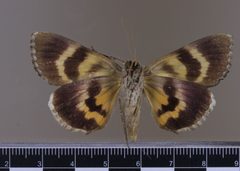
Distinguished from other Catocala by specific hindwing color pattern and forewing markings; precise identification typically requires examination of wing patterns and may reference genitalia for confirmation. The 'Little Wife Underwing' suggests relatively small size within the . Separated from similar eastern underwings by combination of forewing ground color, pattern elements, and hindwing banding.
Images
Habitat
Associated with forested and woodland ; specific plant requirements suggest presence of suitable larval food plants. Found in dry mixed conifer forest with oaks in New Mexico observations.
Distribution
Eastern and central North America: from Massachusetts and Connecticut south to Florida, west to Texas and New Mexico. GBIF records confirm presence in North America.
Seasonality
active during summer months; National Week observations in late July confirm summer period. Specific not detailed in sources.
Behavior
; attracted to artificial lights, though underwing moths often remain on the periphery of lighted areas rather than landing directly on sheets. When at rest, holds forewings together over back to conceal brightly colored hindwings. If disturbed, spreads wings to flash hindwing colors as a startle defense against .
Ecological Role
may contribute to pollination; larvae function as herbivores. Serves as prey for including birds, bats, and spiders.
Human Relevance
Subject of citizen science through National Week events. Featured in moth-watching and blacklighting activities. No significant economic impact documented.
Similar Taxa
- Catocala aholibahAnother large underwing found at light stations in Colorado, distinguished by different hindwing pattern
- Catocala verillianaSmaller underwing sympatric in some regions, separated by size and wing pattern details
- Catocala amestrisWestern underwing recorded in southern Colorado, distinguished by geographic range and wing patterns
More Details
Etymology
The specific epithet 'muliercula' is Latin meaning 'little wife,' reflected in the 'Little Wife Underwing.' The name Catocala is Greek for 'beautiful below,' referring to the striking hindwings hidden beneath the cryptic forewings.
Taxonomic History
Originally described by Guenée in 1852. The Catocala was formerly placed in Noctuidae but is now classified in Erebidae following molecular phylogenetic studies.
Citizen Science Observations
Documented in iNaturalist with 569 observations as of source date, indicating moderate detection and reporting by naturalists.
Sources and further reading
- BugGuide
- GBIF taxonomy match
- iNaturalist taxon
- NCBI Taxonomy
- Catalogue of Life
- A Gathering of Lepidopterists: Who's Who of the Butterfly, Moth Experts | Bug Squad
- Got Moths? Celebrate National Moth Week and Global Citizen Science
- Bug Eric: National Moth Week Recap, 2015
- Bug Eric: National Moth Week Recap for Colorado Springs
- Bug Eric: National Moth Week 2024 Recap from Kansas City
- Bug Eric: New Mexico Night Bugs