
Catocala andromache
H. Edwards, 1885
Andromache Underwing
Catocala andromache, the Andromache Underwing, is a in the Erebidae. It belongs to the Catocala, commonly known as underwing moths, which are characterized by their cryptic forewings and brightly colored hindwings. The is found in the southwestern United States, specifically from southern California to Arizona. Like other underwings, it exhibits the genus's namesake trait of concealing its vibrant hindwings beneath dull forewings at rest.
Pronunciation
How to pronounce Catocala andromache: //ˌkæ.təˈkeɪ.lə ænˈdrɒm.ə.ki//
These audio files are automatically generated. While they are not always 100% accurate, they are a good starting point.
Identification
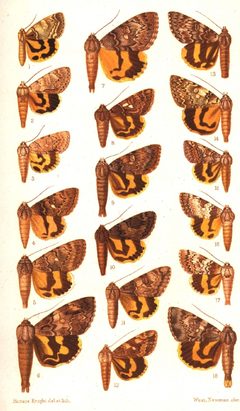
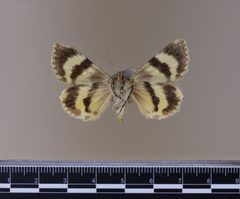
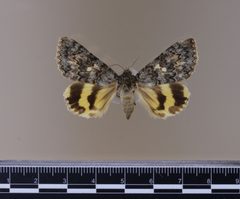
As a member of the Catocala, C. andromache possesses the diagnostic underwing : forewings that are typically dull gray or brown with intricate bark-like patterning for camouflage, and hindwings that are brightly colored with contrasting bands or patches of orange, red, black, white, or blue. Specific identification to level within Catocala requires examination of hindwing color pattern, forewing markings, and often genitalia dissection. The species is distinguished from other southwestern Catocala by its particular combination of forewing maculation and hindwing coloration.
Images
Distribution
Southern California to Arizona, in the southwestern United States.
Behavior
Like other underwing moths, are and have been observed to remain on the periphery of lighted areas rather than coming directly to lights. They have been flushed from daytime resting positions on tree trunks.
Ecological Role
likely serve as . Larvae are presumed to be herbivores, as is typical for the , though specific plants for C. andromache are not documented in available sources. The contributes to local biodiversity as a food source for including bats, birds, and predatory insects.
Human Relevance
Subject of interest to lepidopterists and citizen scientists participating in observation events such as National Moth Week. The represents part of the diverse underwing moth fauna of the American Southwest that attracts moth enthusiasts.
Similar Taxa
- Other Catocala speciesNumerous congeneric occur in western North America with similar cryptic forewing patterns; precise identification requires detailed examination of wing patterns and often genitalia.
- Catocala epioneAnother southwestern underwing with overlapping range; distinguished by specific hindwing and forewing pattern details.
- Catocala verillianaOccurs in overlapping regions; separation based on forewing markings and hindwing coloration.
Sources and further reading
- BugGuide
- GBIF taxonomy match
- iNaturalist taxon
- NCBI Taxonomy
- Catalogue of Life
- A Gathering of Lepidopterists: Who's Who of the Butterfly, Moth Experts | Bug Squad
- Got Moths? Celebrate National Moth Week and Global Citizen Science
- Bug Eric: National Moth Week Recap, 2015
- Bug Eric: National Moth Week Recap for Colorado Springs
- Bug Eric: National Moth Week 2024 Recap from Kansas City
- Bug Eric: New Mexico Night Bugs