
Ctenucha venosa
Walker, 1854
Veined Ctenucha Moth
Ctenucha venosa, commonly known as the veined ctenucha , is a moth in the Erebidae. First described by Francis Walker in 1854, it is one of several North American Ctenucha known for -mimicking coloration. are active from spring through late autumn with multiple per year. The species occurs across the southwestern United States and extends south through Mexico to Venezuela.
Pronunciation
How to pronounce Ctenucha venosa: /ktɛˈnuːkə vɛˈnoʊsə/
These audio files are automatically generated. While they are not always 100% accurate, they are a good starting point.
Identification
Forewing length 14–16 mm distinguishes it from larger relatives. Separation from other Ctenucha requires examination of wing venation patterns and geographic occurrence. Ctenucha virginica occurs east of the Rocky Mountains and does not overlap in range. Ctenucha rubroscapus has red shoulder patches not present in C. venosa. Final identification may require reference to genitalia or expert confirmation.
Images
Appearance
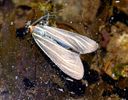
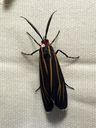
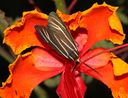
Forewing length 14–16 mm. The exhibits -mimicking coloration characteristic of the Ctenucha, with contrasting dark and light patterning. Specific details of wing venation and body coloration for this species are not well documented in available sources.
Habitat
Grassland and prairie . Associated with areas supporting larval grasses including Bouteloua curtipendula (sideoats grama).
Distribution
United States: southern Nevada, Arizona, Colorado, Kansas, Oklahoma, and Texas. Mexico, Guatemala, Panama, and Venezuela.
Seasonality
on wing from April to November. Multiple per year.
Diet
Larvae feed on various grasses including Bouteloua curtipendula (sideoats grama). feeding habits are not documented in available sources.
Host Associations
- Bouteloua curtipendula - larval sideoats grama
Life Cycle
Multiple per year. Specific details of , larval, and pupal stages are not documented in available sources.
Behavior
activity pattern. fly during daylight hours.
Ecological Role
Larval herbivore on native grasses. role in pollination is not documented. The participates in mimicry complexes as a mimic, though specific protective effects have not been quantified.
Similar Taxa
- Ctenucha virginicaSimilar -mimicking appearance but occurs east of the Rocky Mountains with no geographic overlap
- Ctenucha rubroscapusSimilar size and general appearance but has distinctive red shoulder patches not present in C. venosa
- Alcathoe pepsioidesClearwing moth with -mimicking appearance but belongs to Sesiidae and has transparent wings with dark borders