Arctia plantaginis
(Linnaeus, 1758)
wood tiger, wood tiger moth
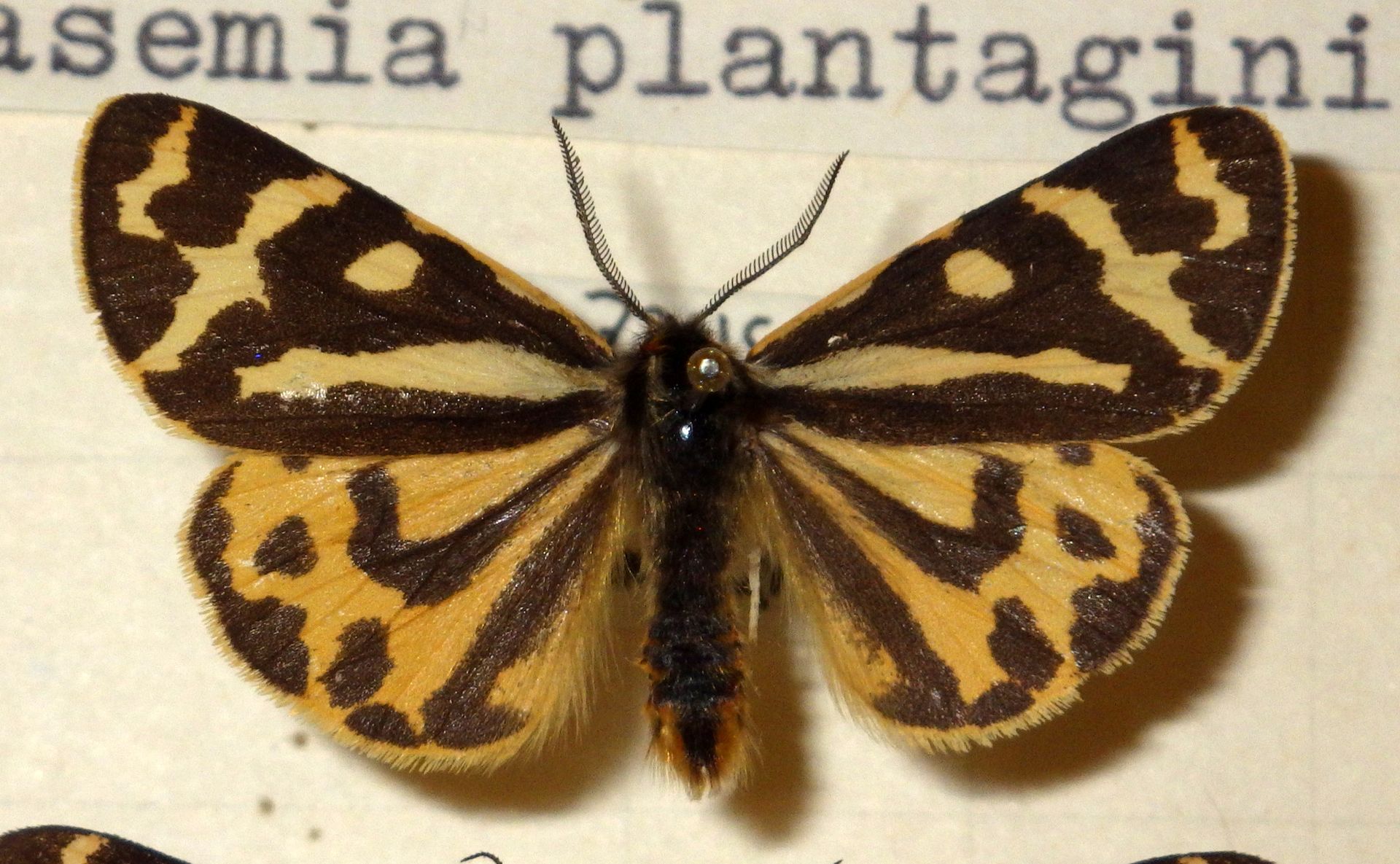
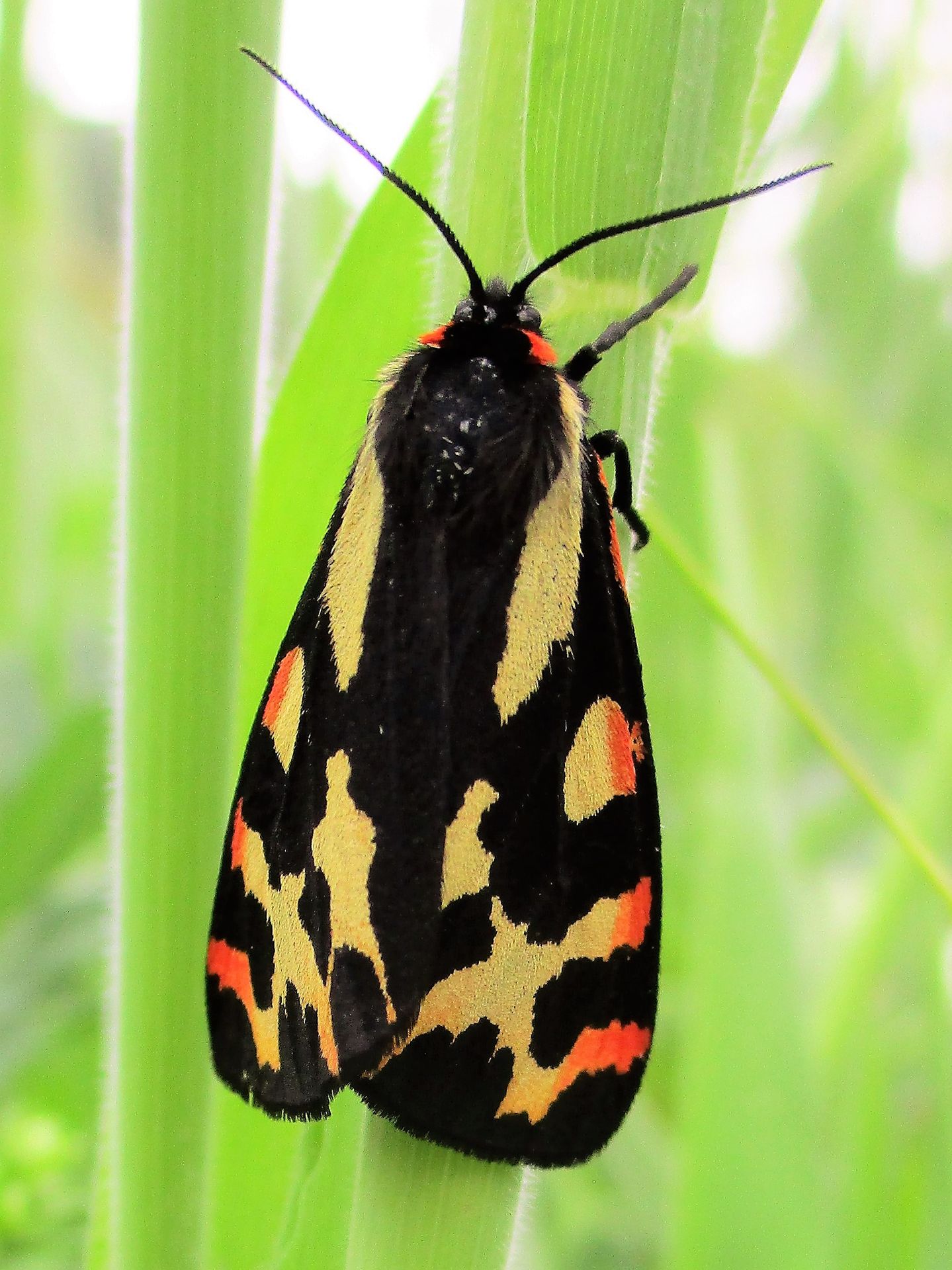
Arctia plantaginis, commonly known as the wood tiger moth, is a Holarctic in the Erebidae. Males exhibit striking color with yellow or white hindwing morphs, both featuring black banding patterns that function as aposematic warning signals. The species has been extensively studied as a model organism for understanding the evolutionary trade-offs between avoidance, , immune function, and . Larvae show predator-induced plasticity in warning signal expression, developing more melanized coloration when exposed to risk.
Pronunciation
How to pronounce Arctia plantaginis: /ˈɑːrk.ti.ə plænˈtæ.dʒɪ.nɪs/
These audio files are automatically generated. While they are not always 100% accurate, they are a good starting point.
Identification
Distinguished from similar tiger moths by the combination of black forewings with ivory-yellow bands and the distinctive hindwing coloration: yellow or white with black banding in males, red with black base in females. The wood tiger moth is notably polymorphic in male hindwing color, whereas related typically show less variation. The irregular, often interrupted marginal band on the hindwing and the presence of submarginal spots help separate it from Arctia virginalis and other Arctia species. In North America, the A. p. macromera can be distinguished by geographic range from the Eurasian nominate subspecies.
Images
Habitat
Occurs in slightly moist environments including meadows with nearby streams. frequently found near lupine stands (Lupinus spp.). Occupies montane and lowland across its broad range, from alpine regions to lower elevations. Found in diverse vegetation types across northern latitudes where suitable moisture conditions and larval plants occur.
Distribution
Holarctic distribution spanning northern Eurasia and North America. In Eurasia: from northern Europe south to Anatolia, Transcaucasus, northern Iran, Kazakhstan, Mongolia, China, Korea, and Japan. In North America: from Alaska to Manitoba, south through the Rocky Mountains to southern New Mexico, with isolated in Arizona and the Sierra Nevada mountains of California and Nevada. Alpine populations in Italy, Austria, and Switzerland show high with little genetic differentiation.
Diet
as larvae, feeding on diverse plant . Caterpillars feeding on ribwort plantain (Plantago lanceolata) sequester iridoid glycosides for chemical defense. are capital breeders and do not feed.
Host Associations
- Plantago lanceolata - larval source of iridoid glycosides for chemical defense
- Lupinus - association frequently found near lupine stands
- Aconitum - larval food in captivitypossibly toxic; may impact development
- Larix - larval food in captivitylarch needles used in laboratory rearing
Life Cycle
Complete with , larva, pupa, and stages. Larvae undergo multiple ; molting frequency increases under stress. Development time from egg to adult approximately 72–83 days under laboratory conditions, though this varies with environmental conditions. Larval diet significantly influences adult due to capital breeding strategy where adults rely entirely on resources acquired during larval stage. Pupal mass in females correlates with lifetime egg production.
Behavior
Exhibits aposematic coloration as primary antipredator defense. When threatened, perform death-feigning : dropping to ground, assuming rigid posture with folded legs, where provides camouflage against soil substrate. Can secrete target-specific chemical defense fluids: abdominal fluids deter ants, thoracic fluids deter birds. activity differs between color morphs: white males more active with longer sustained flight periods; yellow males most active during peak female-calling periods. Larvae show -induced plasticity, developing more melanized warning signals when exposed to simulated .
Ecological Role
Serves as prey for birds (notably blue tit Cyanistes caeruleus) and ants, functioning as part of -prey interaction networks. Larval herbivory contributes to plant-insect interactions; of plant secondary compounds links . Aposematic coloration may contribute to predator learning and -level signaling dynamics. feeding habits connect multiple plant to higher trophic levels.
Human Relevance
Used extensively as a model organism in evolutionary research, particularly for studying aposematism, -prey , , immune function trade-offs, and . Research on this has advanced understanding of how multiple maintain genetic in natural . No significant economic importance as pest or beneficial species.
Similar Taxa
- Arctia virginalisSimilar (Ranchman's tiger moth) and appearance; distinguished by geographic range (western North America), different driven by precipitation, and lack of male hindwing color
- Arctia menetriesiiRelated tiger moth in same ; much rarer, not attracted to light, not , flies reluctantly; distinguished by and extremely limited distribution (Finland and Russian Far East)
- Arctia cajaGarden tiger with similar aposematic patterning; has more extensive white spotting on forewings and different hindwing coloration pattern
More Details
Evolutionary significance
A. plantaginis is one of the most intensively studied for understanding the maintenance of under opposing . The coexistence of yellow and white male morphs, despite yellow having stronger warning signals and lower , is maintained through trade-offs with , immune function, and mating success (white males have higher mating success). This system demonstrates that aposematism does not always lead to monomorphism when other components are involved.
Genetic structure
Despite extreme across Alpine , color is maintained through differential selection pressures acting on different populations. Warning signal phenotypes are determined during larval resource allocation and show no phenotypic plasticity in .
Chemical defense
2017 research demonstrated that this produces two distinct chemical defense fluids from separate glands, each targeting specific types—an unusually sophisticated defense system among Lepidoptera.
Sources and further reading
- BugGuide
- Wikipedia
- GBIF taxonomy match
- iNaturalist taxon
- NCBI Taxonomy
- Catalogue of Life
- Rick Karban and the Wooly Bear Caterpillars of Bodega Bay | Bug Squad
- Nota Lepidopterologica | Blog - Part 2
- Nota Lepidopterologica welcomes new Editor-in-Chief Marcin Wiorek
- Academic journal | Blog
- open access | Blog
- Predator-Induced Plasticity on Warning Signal and Larval Life-History Traits of the Aposematic Wood Tiger Moth, Arctia plantaginis