
Apantesis vittata
Fabricius, 1787
Banded Tiger Moth
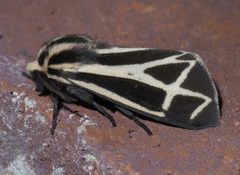
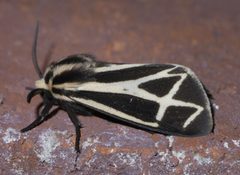
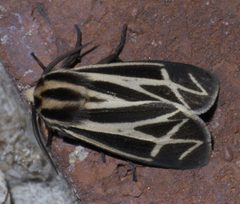
Apantesis vittata, commonly known as the banded tiger moth, is a tiger moth in the Erebidae described by Johan Christian Fabricius in 1787. It occurs in the southeastern and mid-Atlantic United States, with active from early spring through autumn. The has a wingspan of 32–42 mm and larvae feed on various herbaceous plants including dandelions.
Pronunciation
How to pronounce Apantesis vittata: /əˈpænθɪs vɪˈteɪtə/
These audio files are automatically generated. While they are not always 100% accurate, they are a good starting point.
Identification
The can be distinguished from other Apantesis species by its geographic range and period, though precise diagnostic features separating it from closely related banded tiger moths are not clearly documented in available sources. The specific epithet 'vittata' (meaning banded or striped) refers to the wing pattern.
Images
Appearance
have a wingspan of 32–42 mm. The exhibits the characteristic banded pattern typical of tiger moths in the Apantesis, with contrasting light and dark markings on the forewings. Specific coloration details beyond the banded pattern are not documented in available sources.
Habitat
Specific preferences are not well documented. The has been recorded in various terrestrial environments across its range, including areas where larval plants (herbaceous vegetation) occur.
Distribution
United States: Maryland to Florida, west to Kentucky and Louisiana. The occupies the southeastern and lower mid-Atlantic regions of the eastern United States.
Seasonality
are on wing from March to October, indicating a prolonged period spanning spring, summer, and autumn.
Diet
Larvae feed on various herbs, including dandelions (Taraxacum spp.). feeding habits are not documented in available sources.
Host Associations
- Taraxacum - larval food plantdandelions
Life Cycle
Complete with , larva, pupa, and stages. Specific details regarding number of per year, stage, or site are not documented in available sources.
Behavior
are and attracted to light. Specific behavioral details beyond period and light attraction are not documented.
Ecological Role
Larvae function as herbivores on low-growing herbaceous vegetation. Their ecological impact on plant has not been specifically studied. As a tiger moth, may serve as prey for including bats and birds.
Human Relevance
No significant documented economic or cultural importance. The is occasionally encountered by naturalists and enthusiasts during light-trapping events.
Similar Taxa
- Apantesis phalerataSimilar banded tiger moth pattern; geographic overlap in some areas requires careful examination for separation
- Apantesis naisAnother banded tiger moth in the same with potentially overlapping range
More Details
Taxonomic History
The was originally described as Bombyx vittata by Fabricius in 1787 before being transferred to the Apantesis. The genus has undergone taxonomic revision, with some former Grammia species now included in Apantesis.
Sources and further reading
- BugGuide
- Wikipedia
- GBIF taxonomy match
- iNaturalist taxon
- NCBI Taxonomy
- Catalogue of Life
- Jasmin Ramirez Bonilla: Targeting Cucumber Beetles on Melons | Bug Squad
- Arctiidae | Beetles In The Bush
- Chrysomelidae | Beetles In The Bush | Page 5
- Bug Eric: Eight Illinois Wasp and Bee Mimics in Twenty Minutes
- Bug Eric: National Moth Week 2021 Review
- Bug Eric: Remembering National Moth Week 2018