
Apantesis carlotta-nais-phalerata-vittata
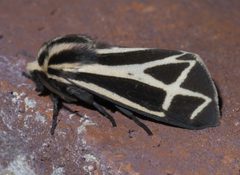
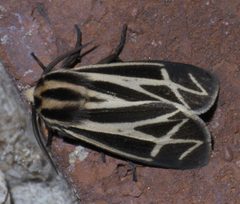
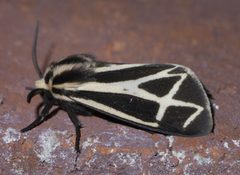
A tiger moth in the Apantesis, characterized by striking black-and-white striped forewing patterns typical of the group. are and attracted to light. The taxonomic status of this entity as a distinct versus a species complex remains unresolved, reflecting ongoing taxonomic revision within the genus.
Pronunciation
How to pronounce Apantesis carlotta-nais-phalerata-vittata: //əˈpæn.tɪˌsɪs ˈkɑr.lɒt.ˌta.naɪz.fəˌlɛr.ə.tə.vɪˈteɪ.tə//
These audio files are automatically generated. While they are not always 100% accurate, they are a good starting point.
Identification
Distinguished from other Apantesis by forewing pattern elements, though precise identification requires examination of genitalia. The bold black-and-white transverse stripes on the forewings are characteristic of the . Separation from closely related species (A. carlotta, A. nais, A. phalerata, A. vittata) is problematic from external characters alone.
Images
Distribution
North America. Documented from Colorado and Kansas based on light-trapping records.
Seasonality
active in mid-summer; observed during National Week events in July.
Behavior
are and strongly attracted to ultraviolet and mercury vapor lights.
Human Relevance
Subject of citizen science documentation through National Week events and iNaturalist observations.
Similar Taxa
- Apantesis naisFormerly treated as a distinct , now potentially ; external overlapping
- Apantesis vittataShares striped forewing pattern; historically confused due to similar appearance
- Apantesis phalerataPart of the same unresolved ; genitalia dissection often required for separation
- Grammia speciesFormerly placed in this ; similar tiger moth appearance and coloration
- Notarctia proximaFormerly in Apantesis; similar black-and-white striped pattern and aposematic coloration