
Apantesis behrii
(Stretch, 1872)
Apantesis behrii is a tiger moth in the Erebidae, first described by Stretch in 1872. The occurs in the western United States from Oregon south through California, with highest abundance in the Siskiyou and Sierra Nevada mountain ranges. It inhabits dry, rocky mountain environments and has a narrow period from early August to late September. Larvae feed on specific plants including Lotus humistratus and Amsinckia species. The species was transferred from the Grammia to Apantesis based on phylogenetic revision.
Pronunciation
How to pronounce Apantesis behrii: //əˈpæn.tə.sɪs ˈbɛə.raɪ//
These audio files are automatically generated. While they are not always 100% accurate, they are a good starting point.
Identification
Identification to level requires examination of genitalia and comparison with closely related Apantesis species. The geographic range in the Siskiyou and Sierra Nevada ranges, combined with the late summer period (August-September), helps distinguish it from sympatric . Formerly classified in Grammia, specimens may be encountered under that in older collections.
Images
Appearance
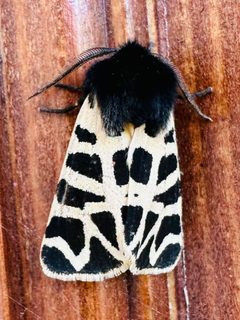
have a wingspan of approximately 34 mm. As a tiger moth in the Arctiinae, it likely exhibits the typical pattern of bold contrasting markings on forewings and often brightly colored hindwings, though specific coloration details require direct specimen examination.
Habitat
Dry lithosol flood plains and balds in mountainous terrain. The is associated with rocky, well-drained substrates at elevation in the Siskiyou and Sierra Nevada ranges.
Distribution
Western North America from Oregon south to California. Most common in the Siskiyou Mountains of southern Oregon/northern California and the Sierra Nevada range of California.
Seasonality
are on wing from early August to late September. The narrow window suggests a with a single per year.
Diet
Larvae feed on Lotus humistratus (a legume) and Amsinckia (fiddlenecks, Boraginaceae). feeding habits are not documented.
Host Associations
- Lotus humistratus - larval food plantLegume
- Amsinckia - larval food plantMultiple in Boraginaceae used
Life Cycle
Complete with , larva, pupa, and stages. Specific details of egg deposition, larval instars, stage, and site are not documented. The late summer adult suggests larvae develop through spring and early summer.
Similar Taxa
- Apantesis phalerataOverlapping western North American range; requires genitalia examination for separation
- Apantesis carlottaSympatric in California; distinguished by subtle wing pattern differences and genitalia
- Grammia speciesFormerly classified in this ; A. behrii was transferred to Apantesis along with other former Grammia , creating potential confusion with older literature and collections
More Details
Taxonomic History
This was originally described as Arctia behrii by Stretch in 1872, later placed in Grammia, and subsequently transferred to Apantesis as part of a broader revision that consolidated the Grammia, Holarctia, and Notarctia into Apantesis.
Conservation Status
Not formally assessed. The restricted montane distribution and specific requirements (dry lithosol balds) may increase vulnerability to climate change and habitat alteration, though trends are unknown.
Sources and further reading
- BugGuide
- Wikipedia
- iNaturalist taxon
- NCBI Taxonomy
- Catalogue of Life
- How the UC Davis Research Scholars Program in Insect Biology Shines | Bug Squad
- Meet a UC Davis Student Who Is Researching the Cold-Adapted Parnassian Butterflies | Bug Squad
- A Boy, Bugs, a Birthday and the Bohart | Bug Squad
- The Joy of Rearing Monarchs | Bug Squad
- Bug Eric: National Moth Week 2021 Review
- Bug Eric: Remembering National Moth Week 2018