
Hyblaeidae
teak moths
Genus Guides
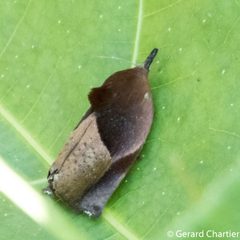
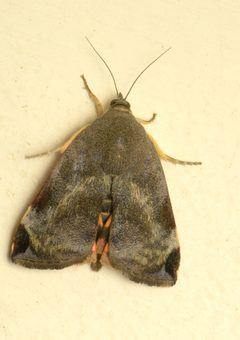
1is a of containing approximately 18 across two : Hyblaea (Old World tropics) and Torone (Neotropics). The family's phylogenetic position within Lepidoptera remains uncertain, with studies placing Hyblaeoidea as sister to Pyraloidea or alternatively grouping with Thyridoidea or butterflies. Males possess a specialized 'hair-pencil' on the hindleg. The family is economically significant due to Hyblaea puera, a major defoliator of teak and mangrove species.
Pronunciation
How to pronounce Hyblaeidae: /haɪˈbleɪ.aɪdiː/
These audio files are automatically generated. While they are not always 100% accurate, they are a good starting point.
Identification
Males can be identified by the presence of a specialized 'hair-pencil' on the hindleg. The is distinguished from Pyraloidea by uncertain but distinct phylogenetic relationships and by larval associations primarily with Bignoniaceae, Verbenaceae, Avicenniaceae, and Rhizophoraceae.
Images
Habitat
Tropical and subtropical forests, including teak plantations and mangrove . Associated with plants in Bignoniaceae, Verbenaceae, Avicenniaceae, and Rhizophoraceae.
Distribution
Hyblaea distributed throughout the Old World tropics; genus Torone restricted to the Neotropics. Hyblaea puera has been introduced to Latin America and is an emerging pest in coastal China.
Seasonality
In Bangladesh teak plantations, one to two peaks occur between late April and July, with occasional flatter peaks in August and September. Population cycles correlate with teak flushing , beginning build-up in March–April.
Diet
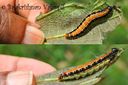
Caterpillars feed almost exclusively on of Bignoniaceae, Verbenaceae, Avicenniaceae, and Rhizophoraceae. Hyblaea puera specifically consumes tender leaves of teak (Tectona grandis) and mangrove species such as Avicennia marina, with older instar larvae consuming entire leaves.
Host Associations
- Tectona grandis - primary teak
- Avicennia marina - mangrove
Life Cycle
laid on foliage. Larvae progress through instars, with third instar onward showing increased feeding damage. Larvae secrete silk-like saliva to roll leaves for concealment and continued feeding. occurs inside rolled leaves. emerge and disperse, with multiple per year where flushing permits.
Behavior
Larvae roll leaves with silk-like secretions for concealment and feeding shelter. exhibit short-range when local leaf maturity or -dependent food depletion occurs. High reproductive capacity facilitates rapid .
Ecological Role
Hyblaea puera acts as a serious defoliating pest in both native and introduced ranges, damaging teak plantations and mangrove . In Guangxi, China, has caused damage to over 300 hectares of mangrove forests. Serves as for including Sympiesis hyblaeae (Eulophidae).
Human Relevance
Major economic pest of teak forestry in South and Southeast Asia. Subject of research including evaluation of plant extracts (Lippia javanica) and agents. threaten mangrove conservation efforts in China.
Similar Taxa
- PyraloideaHistorically included within Pyraloidea, but now recognized as distinct superfamily Hyblaeoidea based on phylogenetic studies; distinguished by male hindleg hair-pencil and larval associations
- ThyridoideaSome phylogenetic analyses group Hyblaeoidea with Thyridoidea rather than Pyraloidea; relationship remains uncertain
Sources and further reading
- BugGuide
- Wikipedia
- GBIF taxonomy match
- iNaturalist taxon
- NCBI Taxonomy
- Catalogue of Life
- Analysis of gut microbial diversity and function in Hyblaea puera (Lepidoptera: Hyblaeidae)
- "Others": Anomoeotidae, Bucculatricidae, Choreutidae, Cossidae, Drepanidae, Galacticidae, Gracillariidae, Hyblaeidae, Lacturidae, Limacodidae, Plutellidae
- EVALUATION OF BIOEFFICACY OF LIPPIA JAVANICA AGAINST HYBLAEA PUERA (LEPIDOPTERA: HYBLAEIDAE) FROM THE FOREST OF ANDHRA PRADESH, INDIA
- Host Plant Biochemical Diversity, Feeding, Growth and Reproduction of Teak Defoliator Hyblaea puera (Cramer) (Lepidoptera: Hyblaeidae)
- Hosts, Morphological Notes, Distribution Records, and Systematics of Three Common Honduran Moths, Atteva aurea (Attevidae), Mesophleps adustipennis (Gelechiidae), and Hyblaea puera (Hyblaeidae)
- A new species of Sympiesis (Hymenoptera: Eulophidae) parasitic on the teak defoliator Hyblaea puera (Lepidoptera: Hyblaeidae) in India
- Population dynamics of teak defoliator, Hyblaea puera Cram. (Lep., Hyblaeidae) in teak plantations of Bangladesh